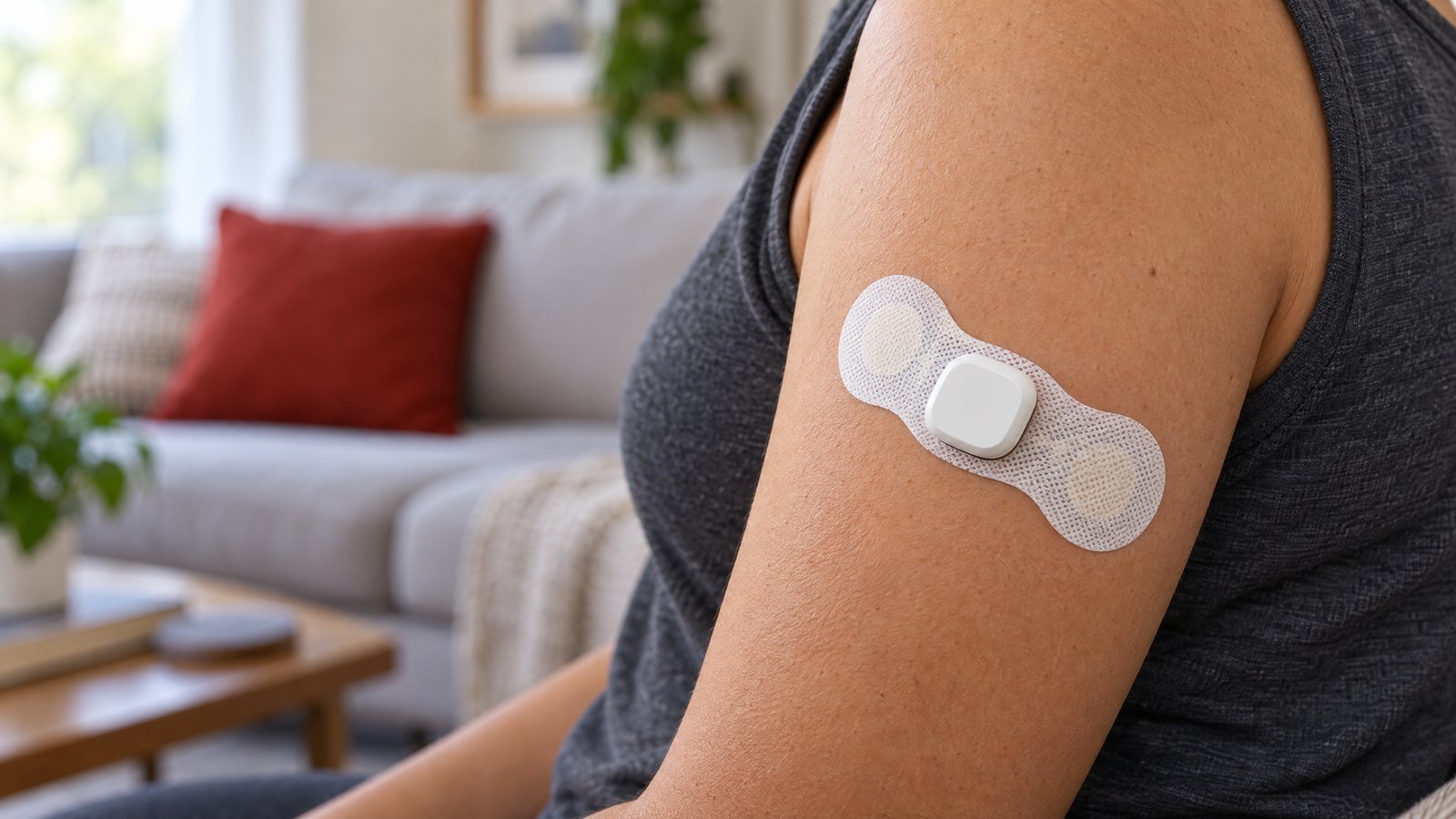
Why Wearable Medical Device Adhesives Fail at Home

A lot of wearables pass every test in the clinic, then start peeling off the first week people take them home.

The sensor works. The electronics work. The data looks great. And then the device starts lifting at the edges by day three, or someone takes it off early because it itches.

More monitoring is moving out of the hospital and into people’s homes. That’s good news for patients and for the companies building these devices. But it changes what the adhesive has to do, and a lot of teams don’t plan for that until late in development.

Here’s what changes.

1. Nobody is there to fix it

In a clinic, a nurse preps the skin, places the device, and checks on it. If an edge starts to lift, someone notices and reinforces it.

At home, the person wearing it does all of that, if they do it at all. They might apply it over lotion, in a rush, or on skin that’s still damp from the shower. The adhesive has to work on skin that wasn’t prepared perfectly, applied by someone who isn’t trained.

2. Real life is harder on tape than a clinic is

At home, people shower, sleep on the device, sweat through a workout, and wear it under tight clothing that rubs the edges all day. Each of those is a different kind of stress on the adhesive: moisture, pressure, friction and flexing.

A tape that holds up for a clinical visit can fail quickly against all of that. Wear testing should look like how people actually live, not just how they sit in an exam room.

3. Comfort becomes a deciding factor

In a clinical setting, people put up with some discomfort because they’re told to. At home, if it itches, it comes off.

That means the adhesive has two jobs that pull against each other. It has to hold on for days, and it has to come off without hurting or irritating the skin. Breathability, how the tape handles moisture underneath, and how gently it releases all matter more than most teams expect.

4. Everyone’s skin is different

Clinical studies often use a fairly controlled group. Once a product goes home, it meets every skin type there is: oily, dry, sensitive, older, younger, hairy, and everything in between.

A tape that works for most people in a trial can still fail for a real share of users at home. Planning for that range early is far easier than finding out from reviews or returns.

5. The adhesive gets chosen too late

This is the big one. On many projects, the adhesive is picked after the device is mostly designed. By then, the size, shape, weight and placement are locked in, and the tape has to work around all of it.

When adhesive questions come up early, there’s room to adjust. A slightly different shape, a different layer, or a different placement can make a big difference in wear time, and those changes are cheap early and expensive late.

What to do about it

If you’re building a device for home use, a few things help:

  • Bring adhesive into the conversation early, while the design can still change.
  • Wear test the way people really live: showers, sleep, exercise, and imperfect application.
  • Test across a wide range of skin types, not just what’s easy to recruit.
  • Think about removal as much as hold. If it hurts to take off, people won’t put the next one on.
  • Plan for the person applying it, with clear instructions and a design that’s hard to get wrong.

We spend a lot of time on this exact problem, for medical wearables and for consumer products like mouth tape and wellness patches, where the same rules apply. If you’re working on something that has to stay on skin outside the clinic, we’re happy to talk it through.

Jason Zajac is Co-Founder and CEO of The Tape Lab and has spent more than 20 years in pressure-sensitive adhesives.

The Future of Wearable Technology: Data Collection in Real-Time

real time data processing

Amidst the overwhelming array of technological marvels at CES Vegas 2024, the globe’s foremost technology trade exhibition, one overarching theme resonated: Artificial Intelligence (AI) has firmly embedded itself into the very fabric of our lives. It is often referred to as “smart” technology, and it was “Everywhere, All the Time, All at Once”. CES 2024 was a great opportunity for The Tape Lab to delve into the realms of innovation, fostering connections with our valued clients and collaborators, and engage in new discussions with industry leaders.

From AI-powered grills, to body cameras with AI-driven decision-making capabilities, and even cat doors equipped with AI recognition systems, the sheer breadth of AI applications astounded us. The convergence of AI with health and well-being was equally prominent, with innovations ranging from glucose predictions to vital sign monitoring. Among the myriad AI innovations, wearables stood out as beacons of hope for those who aspire to take greater control of their health and well-being.

Wearable Technology for AI and Real-time Data Processing

At its core, AI is a catalyst for rapid data processing, making information more accessible and readily distributable. The pivotal aspect of this technological revolution is the seamless transmission of data. 

At The Tape Lab, we view the world through a unique lens—a sticky lens, if you will. Our focus lies in the realm of adhesive solutions that underpin the future of wearable technology and wearables data collection. 

How to Get Data from Wearables for Health Insights

Wearable devices are now adept at effortlessly capturing vital data and measurements and relaying them to centralized systems for real-time data analytics. This paradigm shift empowers individuals to become proactive health managers, realize the benefits of wearable technology, and leverage data-driven insights to make informed decisions about our own well-being.

“I have been saying this for a while to anyone who wanted to listen to me – in the future we will not be having primary care physicians. Self monitoring will give us the daily tools to better understand our bodies and the indicators to know when we are not well. In this evolving landscape, traditional in-person doctor visits and hospital stays are giving way to a new era. Smart wearables are entrusted with the role of monitoring physiological indicators, collecting vital data, and transmitting it directly to healthcare professionals. This signifies a monumental shift: our wearables are no longer just medical tools; they are our virtual healthcare providers.”

Jason Zajac, The Tape Lab CEO

This realization has profound implications for adhesive solutions, particularly those designed for wearables that adhere directly to the skin. For example, it would be critical and commonplace to base decisions on data analytics for wearable sensors that measure vitals.  The Tape Lab recognizes this critical need and stands ready to provide secure, efficient, and comfortable stick-to-skin solutions.

The Urgency to Normalize Wearable Health Technology

Our CES journey allowed us to engage with a diverse array of clients—some long-standing partners and others eager to embark on their own wearable technology ventures. These visionaries are crafting groundbreaking innovations, including whole-body athletic trackers, heart monitors, vitals monitoring devices, weight loss wearables, smart incontinence readers, baby monitors, fetal heartbeat monitors, glucose readers, infrared wearables, and sleep monitoring solutions.

“In the age of wearables, where AI is empowering individuals to take control of their health, tape plays a pivotal role as the unsung hero. It’s the adhesive that bridges the gap between data and action, making wearables not just a convenience but a revolution in healthcare management. At The Tape Lab, we’re committed to providing innovative adhesive solutions that enable these incredible devices to stick to skin, paving the way for a future where individuals actively manage their health with ease.”

Jason Zajac, President/CEO, The Tape Lab.

For those in search of a partner to shepherd their medical device from conception to fruition, your quest concludes here. The Tape Lab offers unwavering support, from ideation to navigating the intricacies of the FDA 510(k) process, all the way through fulfillment and shipping. We extend our expertise to startups and engineers, enabling them to bring their visionary devices to life.

In essence, AI is reshaping health management, entrusting individuals with greater control over their well-being. Tape, often the unsung hero, serves as the vital linchpin for many of these transformative wearable products. As we bear witness to the confluence of AI and adhesive technology, the future of healthcare is becoming more personal, precise, and empowering.

The Tape Lab is Building the Future of Wearable Technology

The Tape Lab takes pride in leading this adhesive revolution, supporting the healthcare pioneers of today and tomorrow. Should you share our vision or require a partner in the realm of sticky innovation, please do not hesitate to reach out. Together, we shall shape the future.