
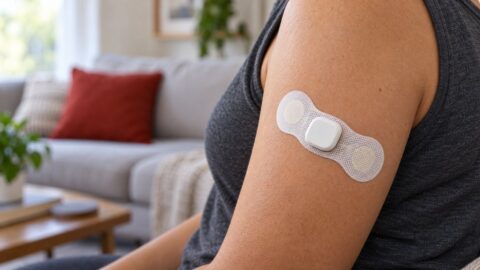
A lot of wearables pass every test in the clinic, then start peeling off the first week people take them home.
The sensor works. The electronics work. The data looks great. And then the device starts lifting at the edges by day three, or someone takes it off early because it itches.
More monitoring is moving out of the hospital and into people’s homes. That’s good news for patients and for the companies building these devices. But it changes what the adhesive has to do, and a lot of teams don’t plan for that until late in development.
Here’s what changes.
1. Nobody is there to fix it
In a clinic, a nurse preps the skin, places the device, and checks on it. If an edge starts to lift, someone notices and reinforces it.
At home, the person wearing it does all of that, if they do it at all. They might apply it over lotion, in a rush, or on skin that’s still damp from the shower. The adhesive has to work on skin that wasn’t prepared perfectly, applied by someone who isn’t trained.
2. Real life is harder on tape than a clinic is
At home, people shower, sleep on the device, sweat through a workout, and wear it under tight clothing that rubs the edges all day. Each of those is a different kind of stress on the adhesive: moisture, pressure, friction and flexing.
A tape that holds up for a clinical visit can fail quickly against all of that. Wear testing should look like how people actually live, not just how they sit in an exam room.
3. Comfort becomes a deciding factor
In a clinical setting, people put up with some discomfort because they’re told to. At home, if it itches, it comes off.
That means the adhesive has two jobs that pull against each other. It has to hold on for days, and it has to come off without hurting or irritating the skin. Breathability, how the tape handles moisture underneath, and how gently it releases all matter more than most teams expect.
4. Everyone’s skin is different
Clinical studies often use a fairly controlled group. Once a product goes home, it meets every skin type there is: oily, dry, sensitive, older, younger, hairy, and everything in between.
A tape that works for most people in a trial can still fail for a real share of users at home. Planning for that range early is far easier than finding out from reviews or returns.
5. The adhesive gets chosen too late
This is the big one. On many projects, the adhesive is picked after the device is mostly designed. By then, the size, shape, weight and placement are locked in, and the tape has to work around all of it.
When adhesive questions come up early, there’s room to adjust. A slightly different shape, a different layer, or a different placement can make a big difference in wear time, and those changes are cheap early and expensive late.
What to do about it
If you’re building a device for home use, a few things help:
- Bring adhesive into the conversation early, while the design can still change.
- Wear test the way people really live: showers, sleep, exercise, and imperfect application.
- Test across a wide range of skin types, not just what’s easy to recruit.
- Think about removal as much as hold. If it hurts to take off, people won’t put the next one on.
- Plan for the person applying it, with clear instructions and a design that’s hard to get wrong.
We spend a lot of time on this exact problem, for medical wearables and for consumer products like mouth tape and wellness patches, where the same rules apply. If you’re working on something that has to stay on skin outside the clinic, we’re happy to talk it through.
Jason Zajac is Co-Founder and CEO of The Tape Lab and has spent more than 20 years in pressure-sensitive adhesives.
