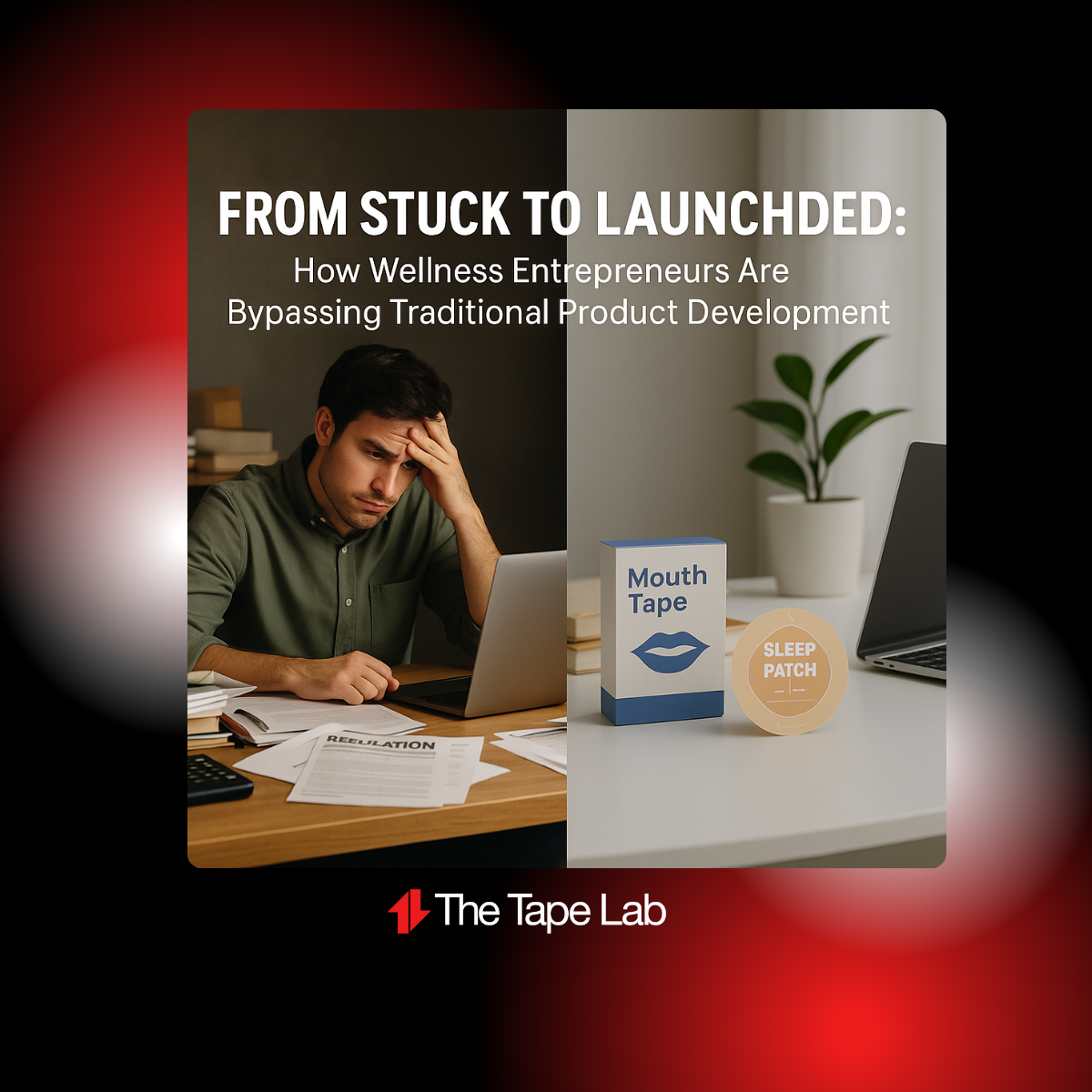
From Stuck to Launched: How Wellness Entrepreneurs Are Bypassing Traditional Product Development

From Stuck to Launched poster

In the fast-paced wellness industry, the difference between success and obscurity often comes down to one factor: speed to market. While many aspiring entrepreneurs find themselves trapped in the product development cycle, a new breed of wellness founders is leveraging innovative shortcuts to launch profitable brands in record time.

The Hidden Roadblock to Your Wellness Brand

You’ve done the research. You understand your audience. You’ve identified a genuine need in the market. You’re ready to launch your wellness brand and start generating revenue.

But then reality hits.

Product development is a minefield of complications:

  • Manufacturing relationships that require massive MOQs (minimum order quantities)
  • Formulation challenges that send you back to the drawing board
  • Regulatory hurdles that delay your launch by months
  • Supply chain complexities that keep you up at night
  • Rising costs that eat into your projected margins

If this feels familiar, you’re not alone. The journey from concept to launch kills 90% of wellness brand ideas before they ever reach a customer.

“I spent nearly 18 months and $50,000 trying to develop a supplement formula that stood out from the competition,” shares Marcus, a fitness coach who wanted to launch his own product line. “By the time I was ready to launch, three competitors had already beaten me to market with similar concepts.”

The Smarter Approach: Leveraging Existing Innovation

What if there was a way to bypass the lengthy product development cycle entirely?

What if you could launch a scientifically-backed wellness product with exceptional margins in under 60 days?

The answer lies in focusing on delivery method innovation rather than formulation breakthroughs.

The Rise of Skin-to-System Wellness Products

While most wellness entrepreneurs focus exclusively on pills, powders, and potions, the most overlooked opportunity in the market is delivery method innovation.

Two formats in particular are experiencing explosive growth:

  1. Mouth Tape for Sleep Optimization: A simple yet powerful tool endorsed by celebrities from Gwyneth Paltrow to Jimmy Fallon that improves sleep quality by encouraging nasal breathing.

  2. Transdermal Patches: Deliver nutrients directly through the skin, bypassing digestive issues and offering sustained release of active ingredients.

These product formats offer several distinct advantages for new wellness entrepreneurs:

  • High perceived value with production costs a fraction of retail price
  • Scientifically validated benefits without requiring proprietary formulations
  • Differentiation through format, not just ingredients
  • Recurring purchase patterns that build sustainable revenue
  • Low regulatory barriers compared to ingestible supplements

Why Launch a Mouth Tape or Transdermal Patch Brand Now?

The timing for these wellness formats couldn’t be better:

1. The Sleep Economy is Booming

The global sleep economy is projected to reach $100 billion by 2030, with non-prescription sleep aids seeing double-digit annual growth. Mouth taping specifically has seen a 300% increase in search volume in the past year alone.

As sleep continues to be the third pillar of health alongside diet and exercise, simple, effective solutions like mouth tape offer an accessible entry point for wellness entrepreneurs.

2. Consumers Are Seeking Alternatives to Pills

With 40% of Americans struggling to swallow pills and growing concerns about supplement absorption, transdermal delivery methods are gaining massive traction. The transdermal patch market is expected to grow at 4.9% annually, with wellness applications leading this expansion.

3. These Products Offer Exceptional Margins

While many wellness products operate on 30-40% margins, both mouth tape and transdermal patches can offer 70-80% profit margins when properly positioned and branded.

From Concept to Launch in 60 Days: A New Model for Wellness Entrepreneurs

The traditional product development cycle looks like this:

  1. Concept development (1-3 months)
  2. Formulation and prototyping (3-6 months)
  3. Stability testing (3-12 months)
  4. Packaging development (2-3 months)
  5. Regulatory compliance (2-6 months)
  6. Initial production run (1-3 months)

That’s 12-33 months from idea to market – an eternity in the fast-moving wellness space.

However, by leveraging turnkey solutions for mouth tape and transdermal patches, wellness entrepreneurs can compress this timeline dramatically:

  1. Brand development and positioning (1-2 weeks)
  2. Product selection and customization (2 week)
  3. Packaging adaptation (2 week)
  4. Initial production and quality control (1 week)
  5. Marketing preparation and launch (1 week)

The result? A 60-day timeline from concept to market-ready product.

How The The Tape Lab is Changing the Game

At The Tape Lab, we’ve witnessed firsthand the challenges wellness entrepreneurs face. That’s why we created The Launch Lab – a specialized division focused on helping wellness founders bypass traditional product development.

We provide:

  • White-label mouth tape with customizable shapes, designs, and adhesive formulations
  • Ready-to-brand transdermal patches for sleep, recovery, focus, and energy
  • Turnkey branding solutions including packaging, inserts, and brand guidelines
  • Compliance documentation to ensure a smooth launch
  • Marketing guidance specifically for these unique product formats

Our clients typically see their first sales within 65 days of initial consultation, with many achieving profitability by their second production run.

Ready to Launch Your Wellness Brand?

If you’ve been sitting on a wellness brand idea but find yourself stuck in the product development phase, it may be time to consider a different approach.

The wellness entrepreneurs who succeed in 2025 won’t necessarily be those with revolutionary formulations, but those who can quickly bring effective, science-backed solutions to market while their competitors remain stuck in development.

Mouth tape and transdermal patches represent the perfect intersection of trending wellness needs, delivery method innovation, and simplified launch strategy.

To learn more about how you can launch your wellness brand with these innovative products in just 30 days, visit TheTapeLab.com/launch or schedule a consultation with our product specialists.

The Tape Lab’s Launch Lab division helps wellness entrepreneurs bring stick-to-skin health products to market quickly. Specializing in white-label mouth tape and transdermal patches, we enable founders to launch products faster without the typical challenges of product development.
Navigating FDA 510(k) Approval for Wearable Devices with Skin Adhesives

A table with papers and some people sitting at it


A blue plastic object is on the table.

Navigating FDA 510(k) Approval for Wearable Devices with Skin Adhesives

In the rapidly evolving world of medical technology, wearable devices that adhere to the skin are revolutionizing patient care and monitoring. However, bringing these innovative products to market requires navigating the complex FDA 510(k) approval process. This guide will walk you through the key steps, challenges, and best practices for obtaining FDA 510(k) approval for wearable devices that use adhesive tape to stick to the skin.

Understanding Wearable Medical Devices in the Context of FDA Regulations

Wearable medical devices are transforming healthcare by providing continuous, real-time patient data and enabling remote monitoring. These devices, which often use adhesive technology to attach to the skin, present unique regulatory challenges. The FDA classifies most wearable devices under the 510(k) premarket notification pathway, requiring manufacturers to demonstrate that their device is substantially equivalent to a legally marketed predicate device.

The market for wearable medical devices is rapidly expanding, with innovations in skin-adhesive technologies pushing the boundaries of patient monitoring and treatment. As these devices become more sophisticated, understanding the regulatory landscape is crucial for successful market entry.

The FDA 510(k) Approval Process: An Overview

Obtaining FDA 510(k) approval for wearable devices requires a thorough understanding of both the regulatory process and the unique challenges posed by skin-adhesive technologies. The process involves several key steps:

  1. Device Classification: Determine the device’s risk level and corresponding regulatory controls.
  2. Predicate Device Identification: Find a legally marketed device with similar intended use and technological characteristics.
  3. Performance Testing: Conduct necessary tests to demonstrate safety and effectiveness.
  4. Submission Preparation: Compile all required documentation and test results.
  5. FDA Review: Submit the 510(k) application for FDA evaluation.
  6. Clearance Decision: Receive FDA decision on substantial equivalence.

FDA Cleared vs Approved: Key Differences for Wearable Device Manufacturers

Understanding the distinction between FDA cleared vs approved is crucial for wearable device manufacturers navigating the regulatory landscape. While both terms indicate FDA authorization for marketing, they have different implications:

  • FDA Cleared: Applies to most 510(k) submissions. It means the device is substantially equivalent to a predicate device in terms of safety and effectiveness.
  • FDA Approved: Typically used for higher-risk devices that go through the Premarket Approval (PMA) process, requiring more rigorous clinical testing.

For wearable devices using skin adhesives, FDA clearance through the 510(k) process is the most common pathway. However, novel technologies or high-risk applications might require the more stringent PMA process.

Unique Considerations for Wearable Devices with Skin Adhesives

Wearable devices that use tape to adhere to the skin present specific challenges in the 510(k) approval process:

Biocompatibility and Material Testing

The FDA requires rigorous testing to ensure the safety of materials in direct contact with the skin. Key considerations include:

  • Cytotoxicity Testing: Evaluating potential toxic effects on cells.
  • Sensitization Assessment: Checking for allergic reactions.
  • Irritation Studies: Determining if the adhesive causes skin irritation.
  • Long-term Wear Testing: Assessing the effects of prolonged skin contact.

Adhesive Performance and Durability

Manufacturers must demonstrate that the adhesive maintains its integrity and performance over the intended wear time. This includes:

  • Adhesion Strength Testing: Measuring the force required to remove the device.
  • Moisture Resistance: Evaluating performance in various humidity conditions.
  • Skin Flexibility Compatibility: Ensuring the device moves naturally with the skin.

Overcoming Common Challenges in 510(k) Approval

Navigating the FDA 510k approval timeline for wearable devices can be complex, but understanding common hurdles can help streamline the process:

  1. Data Quality and Quantity: Ensure comprehensive and well-organized test data.
  2. Predicate Device Selection: Choose an appropriate predicate to demonstrate substantial equivalence.
  3. Regulatory Strategy: Develop a clear strategy aligned with FDA expectations.
  4. Documentation Clarity: Provide clear, concise, and complete documentation.

Best Practices for a Successful Application

To increase the chances of a smooth approval process:

  1. Early FDA Engagement: Utilize the Pre-Submission Program for feedback on your testing plan.
  2. Comprehensive Testing Protocol: Develop a robust testing plan that addresses all potential safety and effectiveness concerns.
  3. Clear Substantial Equivalence Argument: Articulate how your device compares to the predicate device in terms of intended use and technological characteristics.
  4. Thorough Risk Analysis: Conduct a detailed risk assessment and mitigation strategy.
  5. Stay Updated on Regulations: Keeping abreast of FDA wearable device regulations is essential for companies developing skin-adhesive technologies.

Future Trends and Regulatory Evolution

As wearable technology continues to advance, staying up-to-date with FDA wearable device regulations is essential for companies developing skin-adhesive technologies. Future trends likely to impact the regulatory landscape include:

  1. Increased Focus on Real-World Data: The FDA is showing growing interest in real-world performance data to support regulatory decisions.
  2. Enhanced Cybersecurity Requirements: As wearable devices become more connected, expect stricter security and data protection standards.
  3. Streamlined Processes for Digital Health Technologies: The FDA is working on new frameworks to expedite the review of digital health products.
  4. Greater Emphasis on User Experience: Usability and human factors engineering will play an increasingly important role in the approval process.

Conclusion

Navigating the FDA 510(k) approval process for wearable devices with skin adhesives requires a thorough understanding of regulatory requirements, meticulous planning, and a commitment to safety and effectiveness. By focusing on biocompatibility, adhesive performance, and comprehensive testing, manufacturers can increase their chances of successful clearance.

Remember, the journey doesn’t end with FDA clearance. Ongoing compliance, post-market surveillance, and continuous improvement are crucial for long-term success in the dynamic wearable medical device market. By staying informed about regulatory trends and maintaining open communication with the FDA, you can position your innovative wearable devices for success in this exciting and rapidly evolving field.

Revolutionizing Medical Tapes for Wearable Devices: The Tape Labโ€™s Engineering Approach

A poster with the title of adhesives 1 0 1 : wearable devices.


In the rapidly evolving world of wearable medical technology, the unsung hero often lies in the smallest details – specifically, the tape that holds these innovative devices securely and comfortably to the human body. At The Tape Lab, we’ve made it our mission to engineer these critical components with precision and care. Our expertise in medical tapes for wearable devices goes beyond simple adhesion; we’re crafting solutions that enhance device performance, ensure patient comfort, and meet the rigorous demands of the healthcare industry.

The Evolution of Medical Tapes in Wearable Technology

The landscape of wearable medical devices has transformed dramatically in recent years, driven by advancements in telehealth and remote patient monitoring. This evolution has placed new demands on the humble medical tape, requiring it to do more than ever before. The Tape Lab specializes in engineering medical tapes that meet the unique demands of wearable devices, from ensuring long-term adhesion to accommodating the flexibility needed for patient comfort.

As wearable technology becomes more sophisticated, so too must the tapes that secure these devices to the skin. We’re not just talking about simple bandages anymore; modern medical tapes must contend with challenges like:

  • Varying skin types and conditions
  • Extended wear times
  • Exposure to moisture and temperature fluctuations
  • The need for breathability to maintain skin health
  • Compatibility with device electronics and sensors

Our engineering process takes all these factors into account, resulting in tape solutions that are as advanced as the devices they support.

Engineering Precision: The Science Behind Medical Adhesive Tape

At The Tape Lab, we understand that the success of a wearable medical device often hinges on the quality and specificity of its adhesive components. Our expertise in medical adhesive tape engineering ensures optimal performance and patient comfort in wearable applications. But what sets our approach apart?

  1. Material Selection: We work with a variety of backing materials, including polyurethane, polyester, and polyethylene, each chosen for its unique properties that match specific device requirements.
  2. Adhesive Formulation: While we don’t create the adhesives ourselves, we partner with industry leaders like 3M, Avery Medical, and Berry Plastics to source the perfect adhesive for each application.
  3. Custom Converting: Our state-of-the-art converting services, including die cutting, laminating, and printing, allow us to create tape solutions that fit precise specifications.
  4. Clean Room Manufacturing: Our ISO 8 clean room ensures that every tape product meets the highest standards of cleanliness and quality control.

This combination of material expertise, strategic partnerships, and advanced manufacturing capabilities allows us to engineer medical adhesive tapes that stand up to the rigorous demands of wearable devices.

Optimizing Medical Device Wearables with Custom-Engineered Tapes

The world of medical device wearables is incredibly diverse, ranging from simple activity trackers to complex drug delivery systems. Each device presents its own set of challenges when it comes to adhesion, and that’s where our custom engineering approach shines.

We collaborate with leading manufacturers to create custom tape solutions for cutting-edge medical device wearables. Our process involves:

  1. Consultation: We work closely with device manufacturers to understand the specific requirements of their product.
  2. Design: Our engineering team develops custom tape designs that address the unique challenges of each device.
  3. Prototyping: We create and test prototypes to ensure the tape solution meets all performance criteria.
  4. Production: Once approved, we manufacture the custom tape solution in our clean room facility.

This tailored approach ensures that each wearable device benefits from a tape solution that’s optimized for its specific use case, whether it’s a long-term wear cardiac monitor or a disposable glucose sensor.

Challenges and Solutions in Tape Engineering for Wearable Medical Devices

The success of wearable medical devices often hinges on the quality and specificity of their adhesive components. Some of the key challenges we address include:

  • Skin Sensitivity: We select materials that minimize the risk of irritation, even with prolonged wear.
  • Moisture Management: Our engineered tapes often incorporate breathable materials that allow moisture to escape while maintaining a secure bond.
  • Flexibility: We design tapes that move with the body, ensuring comfort without compromising adhesion.
  • Electronics Integration: For devices with onboard electronics, we engineer tapes that accommodate components like batteries and sensors without interfering with their function.

By addressing these challenges head-on, we help our clients create wearable devices that are not only effective but also comfortable and reliable for patients.

The Importance of Medical Grade Adhesive Tape in Device Performance

When it comes to wearable medical devices, not just any tape will do. Our medical grade adhesive tape undergoes rigorous testing to ensure biocompatibility and long-term reliability. This level of quality is crucial for several reasons:

  • Patient Safety: Medical grade tapes are designed to minimize the risk of skin irritation or allergic reactions.
  • Regulatory Compliance: Our tapes meet stringent industry standards, helping device manufacturers navigate the complex landscape of medical device regulations.
  • Device Longevity: High-quality medical grade tapes ensure that devices stay in place for their intended wear time, improving data collection and treatment efficacy.

By focusing on medical grade adhesive tapes, we help our clients create devices that not only perform well but also meet the high standards expected in the healthcare industry.

The Future of Medical Tape Engineering

As wearable technology continues to advance, so too will the demands placed on medical tapes. At The Tape Lab, we’re always looking ahead, anticipating the needs of tomorrow’s medical devices. Some areas we’re exploring include:

  • Smart Adhesives: Tapes that can respond to changes in the wearer’s skin condition or environment.
  • Biodegradable Options: Environmentally friendly tapes for short-term use devices.
  • Enhanced Sensor Integration: Tapes designed to work seamlessly with next-generation biometric sensors.

Our commitment to innovation ensures that we’ll continue to provide cutting-edge tape solutions as the wearable medical device market evolves.

Partnering with The Tape Lab for Your Wearable Device Needs

In the world of wearable medical devices, the right tape can make all the difference. At The Tape Lab, we bring together material science, engineering expertise, and a deep understanding of the medical device industry to create tape solutions that enhance device performance and patient experience.

Whether you’re developing a new wearable device or looking to improve an existing one, we’re here to help. Our team of experts is ready to work with you to engineer the perfect tape solution for your unique needs.

Ready to take your wearable medical device to the next level? Contact The Tape Lab today to learn how our custom-engineered medical tapes can enhance your product’s performance and user experience.A black and white picture of an x

Navigating FDA Requirements: A Guide to Adhesive Compliance in Medical and Wellness Products

A red ribbon with the fda approved seal.


A black and white picture of an x
FDA Approval Process

A black and white picture of an x

Understanding regulatory requirements for adhesive components can mean the difference between a successful product launch and costly delays. Whether you’re developing a medical device or a nutraceutical delivery system, knowing your regulatory pathway is crucial.

Understanding Your Product Category

Different products face different regulatory challenges:

– Medical Devices: Full FDA compliance pathway

– Nutraceutical Delivery Systems: Dietary supplement regulations

– Cosmetic Applications: Cosmetic regulatory framework

– Wellness Products: General product safety requirements

Each category requires specific documentation and testing protocols.

Biocompatibility Testing: What You Need to Know

Even for non-medical applications, skin safety is paramount:

– ISO 10993 testing considerations

– Cytotoxicity evaluation

– Sensitization testing

– Irritation assessment

– Wear time validation

Understanding these requirements early prevents costly retesting.

Documentation Best Practices

Successful compliance requires robust documentation:

– Material specifications

– Manufacturing protocols

– Quality control procedures

– Testing data

– Supplier certifications

Our experience shows that organized documentation can accelerate your timeline.

Common Submission Pitfalls

Avoid these frequent compliance challenges:

– Incomplete testing data

– Insufficient material documentation

– Inadequate manufacturing controls

– Missing biocompatibility assessments

– Poor change control procedures

Early planning helps navigate these potential obstacles.

Timeline Optimization Strategies

Smart strategies can accelerate your compliance process:

– Early regulatory pathway determination

– Parallel testing protocols

– Strategic material selection

– Proactive documentation preparation

– Expert consultation utilization

Success Case Study

A recent wellness product launch demonstrates effective compliance navigation:

– Challenge: Complex adhesive requirements for skin contact

– Solution: Strategic material selection and testing plan

– Result: Successful launch with complete documentation

– Timeline: 40% faster than industry average

Expert Support Available

Understanding and navigating these requirements doesn’t have to be overwhelming. Our team of experts can guide you through the process, ensuring compliance while optimizing your development timeline.

Visit us at MD&M West Booth 2246 for a personalized consultation on your regulatory pathway. Our experts will help you develop a strategic plan for compliance success.

Click Here to Book Your Regulatory Consultation at MD&M West

Emerging Trends in Wearable MedTech

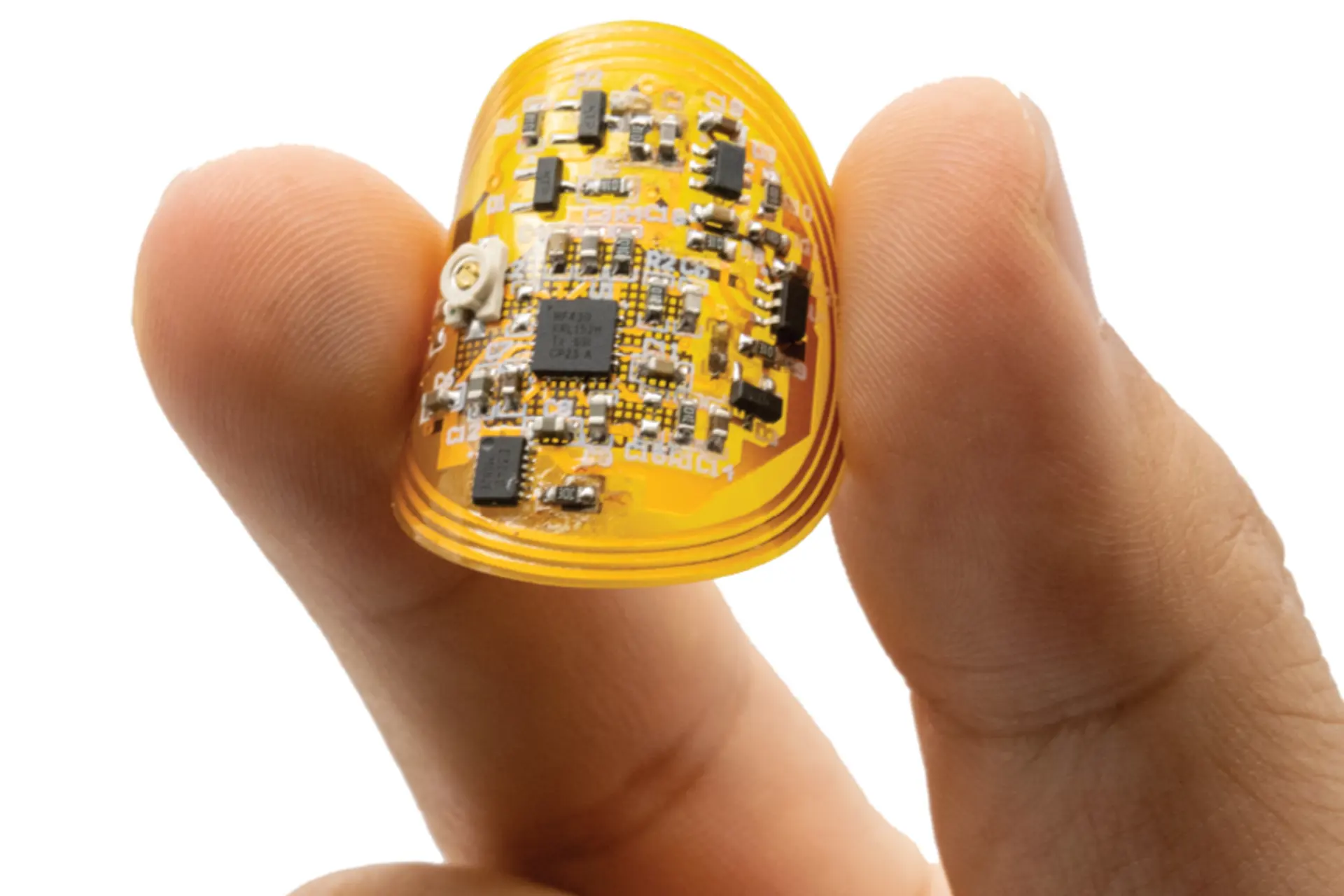
A person holding an electronic device in their hand.

Emerging Trends in Wearable MedTech: Shaping the Future of Healthcare

The world of wearable medical technology (MedTech) is evolving at a breakneck pace, with innovations that promise to reshape healthcare as we know it. From medical-grade wearables that offer critical health data to consumer devices that track wellness metrics, the future is filled with possibilities. At The Tape Lab, weโ€™re dedicated to staying ahead of these trends, providing adhesive solutions that enable our partners to lead the charge in this dynamic industry.

The Rise of Medical-Grade Wearables

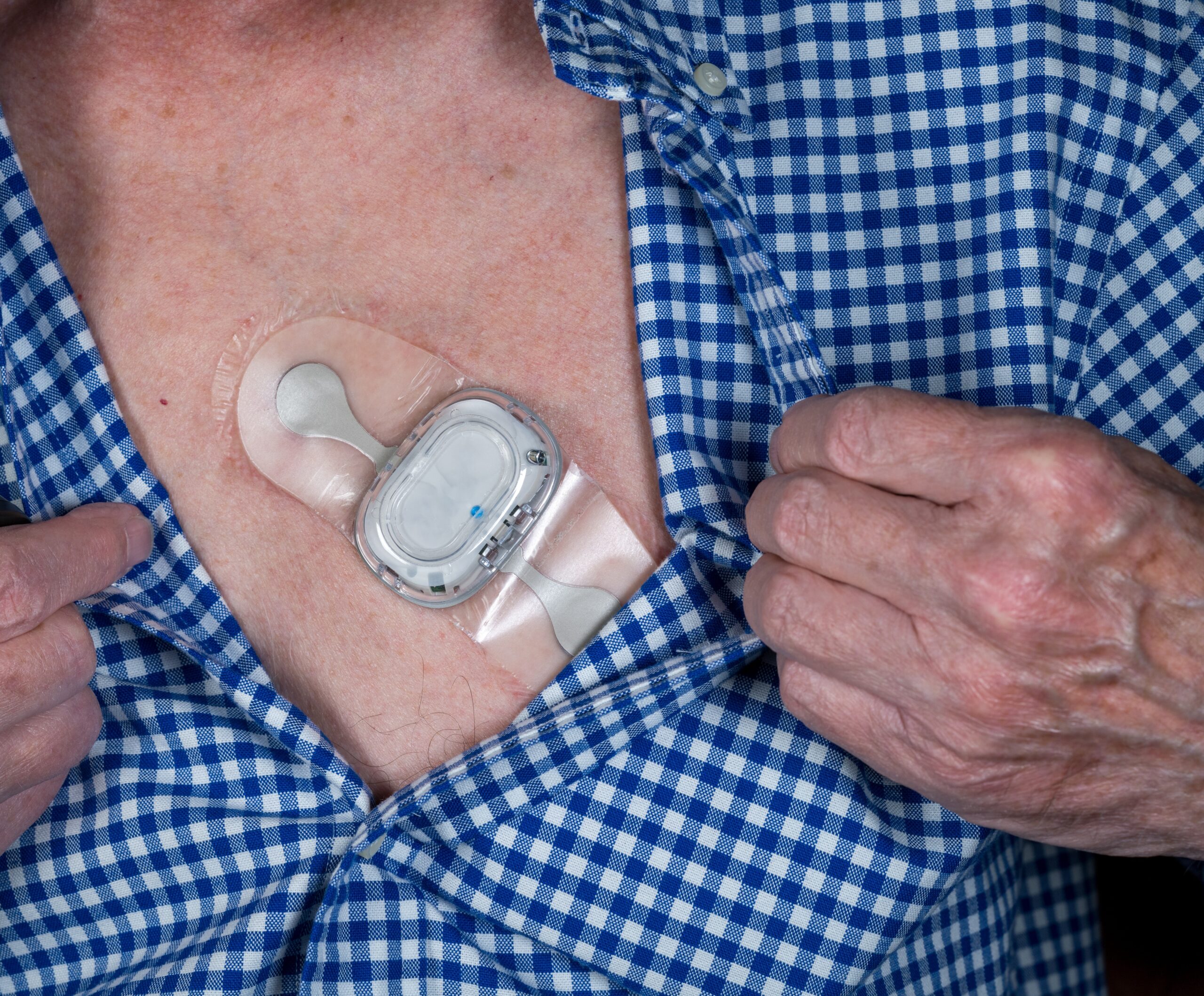
Medical-grade wearables, such as waterproof continuous glucose monitors (CGMs) and heart rate monitors, are becoming indispensable tools in modern healthcare. These devices provide vital data that support clinical decisions, but their success hinges on more than just technology. At The Tape Lab, we understand that the adhesive used in these devices must be durable, breathable, and comfortable for long-term wear. Our custom adhesive solutions are designed to meet the specific needs of medical-grade wearables, ensuring that they remain effective and comfortable for all users.

Consumer-Grade Wearables: Accessibility and Innovation

As consumer-grade wearables become more sophisticated, the demand for reliable and skin-friendly adhesives grows. Whether itโ€™s a smartwatch that monitors heart rate or a fitness tracker that records daily steps, these devices need to stay securely attached to the skin without causing irritation. The Tape Lab specializes in developing adhesives that are both effective and gentle, making sure that consumer-grade wearables provide accurate data without compromising user comfort.

The Future of Wound Care with Smart Bandages

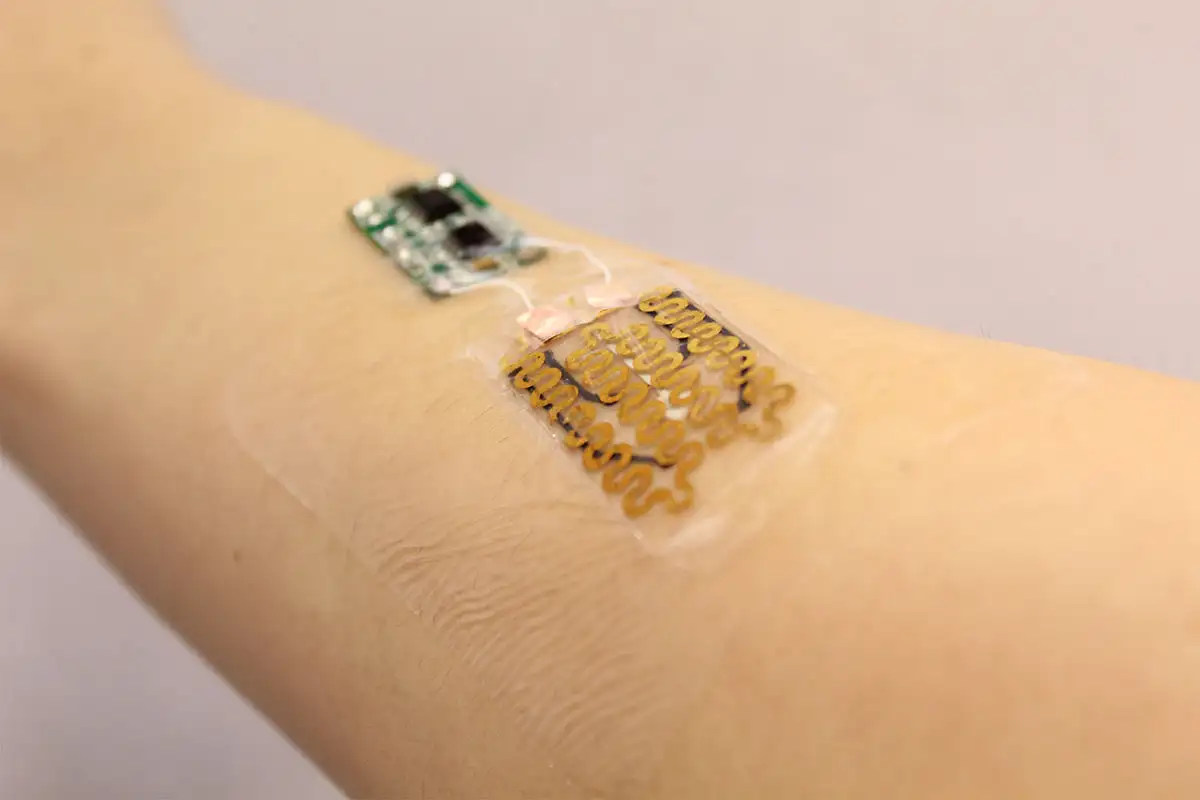
One of the most promising developments in wearable MedTech is the smart bandage. These next-generation dressings are designed to monitor chronic wounds and deliver real-time treatment, offering a new level of care for patients with serious health conditions. At The Tape Lab, weโ€™re excited about the potential of smart bandages and are committed to providing adhesive solutions that support their complex needs. Our adhesives ensure that smart bandages stay securely in place while allowing for the flexibility and breathability necessary for wound healing.

Personalized Health Monitoring: A New Frontier

Wearable devices are increasingly being used for personalized health monitoring, offering insights into everything from sleep patterns to metabolic health. As these devices become more integrated into daily life, the adhesives that secure them must be both durable and skin-friendly. The Tape Lab is at the forefront of this trend, offering custom adhesive solutions that meet the unique needs of personalized health monitoring devices.

Regulatory and Ethical Considerations

As wearable MedTech continues to advance, regulatory and ethical considerations become increasingly important. At The Tape Lab, we work closely with our partners to ensure that our adhesive solutions meet all relevant regulations and standards. By doing so, we help streamline the approval process and bring innovative products to market fasterSure!ย 

Get a Custom Medical Device Adhesive Created for Your New Productย 

At The Tape Lab, weโ€™re not just manufacturing adhesives and other flexible medical materials; weโ€™re crafting partnerships to bring your custom innovations to life. We design, manufacture, and transform adhesives for your personalized medical solution.ย 

Already have an idea of what you need? Request a quick quote

Want to pick the brain of an adhesive engineer to figure out how we can help?

Early Adhesive Selection: The Key to Success in Wearable Medical Device Product Development

Early Adhesive Selection: The Key to Success in Wearable Medical Device Product Development

In the fast-paced world of wearable medical device innovation, every detail matters. Yet, as engineers and designers race to perfect their technologies, one crucial aspect often gets pushed to the side: how the device will adhere to the body. This oversight can lead to costly delays and compromised functionality, which is why The Tape Lab emphasizes the importance of considering adhesive solutions from the very beginning of the development process. What is the best way to avoid this obstacle? Start early.

The Unseen Importance of Adhesive Selection

Adhesive selection is not merely a technical detailโ€”itโ€™s a fundamental component of the device’s design. At The Tape Lab, weโ€™ve seen projects falter when adhesives are chosen too late in the process, forcing expensive redesigns or even delaying product launches. By collaborating with our experts early, designers can ensure that the adhesive solution enhances the deviceโ€™s performance, comfort, and wearability right from the start.

Tailoring Adhesives to Meet Unique Challenges

The Tape Lab excels in customizing adhesive solutions to meet the specific needs of each project, whether that means developing an adhesive that can withstand the rigors of daily movement, or one that is gentle enough for patients with sensitive skin. For example, the versatility of pressure-sensitive adhesives (PSAs) makes them a popular choice in wearable medical devices. However, selecting the right PSA isnโ€™t a one-size-fits-all decision. Our goal is to ensure that the device remains securely in place without sacrificing user comfort.

Early Testing and Iteration: The Path to Success

One of the lessons we stress at The Tape Lab is the value of early and continuous testing. By involving design engineers in the initial stages of adhesive selection and encouraging them to test prototypes themselves, we can identify potential issues early. This iterative approach allows us to fine-tune adhesive solutions, ensuring that by the time the product reaches the market, itโ€™s not only effective but also reliable and comfortable for users.

Adhesive selection should never be an afterthought. Start early. At The Tape Lab, weโ€™re committed to partnering with you from the outset, providing the expertise and resources needed to develop adhesive solutions that elevate your device to its full potential. Start early, test often, and let us help you bring your innovative wearable medical devices to life.

Get a Custom Adhesive Created For Your Medical Device

At The Tape Lab, weโ€™re not just manufacturing medical adhesives; weโ€™re crafting partnerships to bring your custom innovations to life. We design, manufacture, and transform adhesives for personalized medical solutions,.ย 

Already have an idea of what you need? Request a quick quote

ย 

How Smart Bandages Are Transforming Revolutionizing Wound Care

wound care smart bandage

The future of wound care is here, and itโ€™s smarter than ever. With the advent of smart bandages, the treatment of chronic wounds is undergoing a revolution. These innovative dressings are designed to monitor and treat wounds in real-time, promising better patient outcomes and reduced healthcare costs. At The Tape Lab, weโ€™re at the forefront of this exciting development, providing adhesive solutions that are critical to the functionality of these next-generation medical devices.

The Challenges of Chronic Wounds

Chronic wounds are a serious and often underestimated health problem, with survival rates worse than those for many cancers. Traditional methods of wound care rely on subjective visual assessments, which can lead to inconsistent treatments and delayed healing. Smart bandages, however, represent a shift toward a more proactive and data-driven approach to wound management.

The Role of Adhesives in Smart Bandage Technology

Smart bandages, like those developed by researchers at Keck-USC and Caltech, are equipped with sensors and bioelectronic materials that continuously monitor the wound’s condition. These bandages must stay securely attached to the skin, often for extended periods, without causing irritation or discomfort. This is where The Tape Labโ€™s expertise in medical-grade adhesives comes into play. Our solutions ensure that these advanced dressings remain securely in place, while still allowing for flexibility and breathabilityโ€”key factors in supporting the healing process.

Navigating the Path to Market

Bringing innovative products like smart bandages to market involves navigating complex regulatory environments and overcoming significant technical challenges. At The Tape Lab, we work closely with our clients to ensure that their products not only meet but exceed regulatory standards. Our deep understanding of adhesive technology and the medical device landscape positions us as a valuable partner in the development and commercialization of smart bandages and other advanced wound care solutions.

As the healthcare industry moves toward more sophisticated and personalized treatment options, The Tape Lab is committed to supporting these innovations with adhesive solutions that enhance both functionality and patient comfort. The future of wound care is bright, and weโ€™re proud to be part of this transformative journey.

Get a Custom Adhesive Created For Your Product

At The Tape Lab, weโ€™re not just manufacturing medical adhesives; weโ€™re crafting partnerships to bring your custom innovations to life. We design, manufacture, and transform adhesives for your personalized medical solution.ย 

Already have an idea of what you need? Request a quick quote

How Over-the-Counter CGMs Are Transforming Healthcare Monitoringโ€”and What This Means for Medical Wearables

Diabetic,Boy,With,A,Continuous,Glucose,Monitor,Living,Normal,Life,

The landscape of health monitoring is evolving rapidly, and the recent announcement from industry giants like Dexcom and Abbott about launching over-the-counter continuous glucose monitors (CGMs) marks a significant milestone. These innovations promise to broaden access to technology that has already revolutionized diabetes care, bringing millions of new usersโ€”those with prediabetes, type 2 diabetes, and even health-conscious individualsโ€”into the fold.

At The Tape Lab, we understand that while these advancements open up incredible opportunities, they also introduce new challenges, particularly in the realm of long-term device adhesion. As CGMs become a staple in preventive health, the demand for reliable, comfortable, and skin-friendly adhesive solutions is more critical than ever.

Why Adhesive Expertise is Crucial for CGM Success

The efficacy of CGMs hinges not just on their ability to deliver accurate data but also on their capacity to stay securely attached to the userโ€™s skin under varying conditions. This is where our specialized adhesive solutions come into play. Weโ€™ve observed firsthand how issues like skin irritation, device dislodgement during exercise, and adhesive failure in humid environments can undermine the utility of wearable devices. At The Tape Lab, our mission is to preempt these challenges with adhesives that offer both strength and comfort, ensuring that CGMs perform optimally, whether worn by an active individual or someone with sensitive skin.

Real-World Testing: The Tape Lab Difference

Transitioning CGMs to over-the-counter products means theyโ€™ll be used by a broader audience, many of whom might be new to such technology. Therefore, the importance of rigorous real-world testing cannot be overstated. At The Tape Lab, we go beyond laboratory conditions, subjecting our adhesive solutions to the kind of everyday scenarios that users encounter. From enduring the friction of a seatbelt to withstanding long hours in a high-humidity environment, our adhesives are engineered to meet and exceed the demands of real life.

As the healthcare industry embraces this new era of accessible remote health monitoring, The Tape Lab is proud to support this transition with adhesive solutions designed to keep wearables secure, comfortable, and effective for all users. We are excited to be part of this journey toward better health outcomes through innovative technology.

Join the Technological Movement

Now is the time to stay ahead of the curve andย discover adhesive solutionsย for the latest medical technology and wearable devices.ย  Work with our experts to determine the right solution for your product.

Shop Wearable Adhesive Solutions

Hydrogel Applications for Medical Use

Hydrogel Applications for Medical Use

Hydrogels are innovative materials that pop up in a variety of places in our daily lives, often working quietly behind the scenes to improve comfort and performance. For example, contact lenses are comfortable because the hydrogel keeps them moist and allows oxygen to pass through to the eye, which is crucial for eye health.

The Tape Lab knows that understanding how hydrogels work and what is hydrogel used for is key for developing new medical products and improving existing ones as part of research and development.ย  Whether itโ€™s creating better medical devices, more effective delivery systems, or even cool new gadgets, knowing how to harness the unique properties of hydrogels can lead to some pretty amazing innovations.

Dive into the world of hydrogels and the uses for the material in the medical field.

What is a hydrogel?

Hydrogels are three-dimensional networks of hydrophilic polymers that can absorb and retain large amounts of water relative to their own mass. These materials are unique because they can swell and maintain their shape when in contact with water or physiological fluids. The structure of a hydrogel consists of a cross-linked polymer matrix that creates a gel-like consistency, providing a medium that is both flexible and moisture-retentive.

Definition and Structure of Hydrogels

At a molecular level, hydrogels are composed of long-chain polymeric molecules that are chemically or physically cross-linked. Cross-linking refers to the process where polymer chains are interconnected, forming a network that stabilizes the structure of the gel. This network allows the hydrogel to swell in water without dissolving, as the polymer chains absorb and hold water within their matrix.

The hydrophilic nature of the polymers used in hydrogelsโ€”such as polyvinyl alcohol (PVA), polyacrylamide, or natural polymers like alginate and gelatinโ€”ensures they can interact favorably with water, resulting in high water content within the gel.

Hereโ€™s an overview of the key properties of hydrogels:

1. High Water Content

Property: Hydrogels can absorb and retain a substantial amount of water, often up to 90% of their weight.

Significance: This high water content gives hydrogels their gel-like consistency and makes them similar in texture to natural tissues. It also allows them to maintain a moist environment, which is beneficial for applications like wound dressings and contact lenses.

2. Biocompatibility

Property: Many hydrogels are biocompatible, meaning they are well-tolerated by the bodyโ€™s tissues.

Significance: This property is crucial for medical and biological applications. Biocompatibility ensures that hydrogels do not provoke an immune response or cause irritation when in contact with living tissues, making them suitable for implants, wound dressings, and tissue engineering.

3. Flexibility and Softness

Property: Hydrogels are generally soft and flexible.

Significance: The softness and flexibility of hydrogels make them comfortable to use in applications like contact lenses and soft tissue implants. They can conform to the shape of the body or the eye, providing a snug fit and enhancing user comfort.

4. Absorbency

Property: Hydrogels can absorb and retain fluids, including biological fluids like blood and wound exudates.

Significance: This absorbent property is particularly valuable in wound care, where hydrogels manage exudate and prevent maceration of the surrounding skin. It also helps in drug delivery systems where controlled release is important.

5. Biodegradability

Property: Some hydrogels are biodegradable, meaning they can break down into non-toxic components over time.

Significance: Biodegradability is essential for applications such as tissue engineering and drug delivery systems, where the material needs to eventually degrade and be absorbed or excreted by the body without causing harm.

6. Mechanical Properties

Property: The mechanical strength of hydrogels can vary based on their composition and cross-linking density.

Significance: Mechanical properties like elasticity and toughness are important for different applications. For example, softer hydrogels are used for contact lenses and wound dressings, while more robust hydrogels are used as scaffolds in tissue engineering where structural support is needed.

7. pH and Temperature Sensitivity

Property: Certain hydrogels are responsive to changes in pH or temperature, altering their physical state or properties in response to environmental stimuli.

Significance: This responsiveness is useful for creating smart materials that can release drugs or change behavior in response to physiological changes, enhancing the functionality of drug delivery systems and biosensors.

8. Transparency

Property: Many hydrogels are transparent or translucent.

Significance: Transparency is particularly useful for applications like contact lenses and certain diagnostic devices where visual clarity is important.

9. Swelling Behavior

Property: Hydrogels swell when they absorb water, expanding in size while retaining their shape.

Significance: The swelling behavior allows hydrogels to act as reservoirs for drugs or fluids and can be tailored to control the rate of release or absorption in various applications.

10. Cross-Linking

Property: Hydrogels are typically cross-linked, either physically or chemically, which creates a three-dimensional network structure.

Significance: Cross-linking provides structural stability and integrity to the gel, allowing it to hold its shape and resist dissolution in water. The extent and type of cross-linking affect the mechanical properties and swelling behavior of the hydrogel.

How are different hydrogels classified?

Hydrogels can be classified into several types based on their composition and the nature of their cross-linking:

  1. Natural Hydrogels: Derived from natural sources like alginate, collagen, or hyaluronic acid. These are often biocompatible and biodegradable, making them suitable for medical applications.
  2. Synthetic Hydrogels: Made from synthetic polymers such as polyacrylamide or poly(ethylene glycol) (PEG). These can be engineered to have specific properties and are often used in controlled-release systems.
  3. Composite Hydrogels: Incorporate both natural and synthetic polymers to combine the benefits of both types.
  4. Responsive Hydrogels: Change their properties in response to environmental stimuli such as temperature, pH, or light.

Benefits of Hydrogels

  • High Water Content: Hydrogels can hold up to 90% water by weight. This property is beneficial in mimicking the natural extracellular matrix, which provides a favorable environment for cell growth and tissue regeneration.
  • Biocompatibility: Many hydrogels, especially those derived from natural polymers, exhibit excellent biocompatibility. They are less likely to cause an immune response when used in medical applications.
  • Flexibility and Softness: The gel-like consistency of hydrogels makes them flexible and soft, mimicking the physical properties of natural tissues. This quality is particularly valuable in applications where comfort and natural feel are important.
  • Controlled Release: Hydrogels can be engineered to release drugs or other substances in a controlled manner. This feature is useful in sustained drug delivery systems where a steady release of medication is needed.
  • Environmental Responsiveness: Some hydrogels can respond to changes in their environment, such as shifts in temperature or pH. This responsiveness can be harnessed for smart drug delivery or biosensing applications.
  • Ease of Processing: Hydrogels can be molded into various shapes and sizes, and their properties can be adjusted through chemical modifications or cross-linking density changes.

Hydrogel Medical Applications

Hydrogels are versatile materials with a range of medical applications due to their unique properties such as high water content, flexibility, and biocompatibility. Here’s a detailed look at their various uses and how they are applied in different medical contexts:

1. Wound Dressings

Use: Hydrogels are used for wound closure and dressings for managing various types of wounds, including burns, ulcers, and surgical incisions.

How Hydrogels Are Used:

  • Moisture Management: Hydrogels maintain a moist environment that facilitates healing by promoting cell migration and reducing scab formation. This moist environment helps to accelerate the healing process and minimizes pain.
  • Absorption of Exudate: They can absorb excess wound fluid while keeping the wound surface hydrated, preventing maceration (softening of the surrounding skin) and controlling odor.
  • Low Adherence: Hydrogel dressings do not stick to skin on the wound bed, making them easy to remove without damaging new tissue or causing discomfort.

2. Contact Lenses

Use: Hydrogel materials are commonly used in the production of soft contact lenses, including advanced silicone hydrogels.

How Hydrogels Are Used:

  • Oxygen Permeability: Hydrogels allow greater oxygen flow to the cornea compared to traditional lens materials, reducing the risk of complications like hypoxia (low oxygen levels) and dryness.
  • Moisture Retention: The hydrophilic nature of hydrogels helps keep the lens surface hydrated, enhancing comfort and reducing dryness.
  • Flexibility: The soft, flexible nature of hydrogel lenses ensures a better fit and increased comfort compared to rigid lenses.

4. Tissue Engineering

Use: Hydrogels are used as scaffolds in tissue engineering to support the growth and development of new tissues or organs.

How Hydrogels Are Used:

  • Cell Support: The porous structure of hydrogels provides a supportive matrix for cells to attach, proliferate, and differentiate, which is essential for forming new tissues.
  • Customization: Hydrogels can be engineered with specific mechanical and biochemical properties to closely mimic the natural extracellular matrix, which is critical for tissue regeneration.
  • Biocompatibility: They are designed to be compatible with living tissues, minimizing immune responses and facilitating integration with the body.

5. Surgical Implants

Use: Some medical implants and prosthetics incorporate hydrogel materials, including soft tissue implants and certain orthopedic devices.

How Hydrogels Are Used:

  • Flexibility and Comfort: Hydrogels offer a soft, flexible material that can mimic the feel and function of natural tissues, providing comfort and reducing stress on surrounding tissues.
  • Reduced Immune Response: Their biocompatibility helps prevent adverse reactions or rejections when implanted in the body, making them suitable for long-term use.

6. Diagnostic Devices

Use: Hydrogels are used in diagnostic devices and biosensors for detecting and measuring various biological substances.

How Hydrogels Are Used:

  • Responsive Properties: Hydrogels can be engineered to change their properties, such as color or volume, in response to specific biological signals or analytes, making them useful for sensitive and specific assays.
  • Integration with Biological Molecules: They can incorporate reagents or biomolecules that interact with target substances, enhancing the accuracy and efficiency of diagnostic tests.

7. Cryopreservation

Use: Hydrogels are employed in cryopreservation to protect biological samples like cells and tissues during freezing and thawing.

How Hydrogels Are Used:

  • Ice Crystal Prevention: Hydrogels help to prevent the formation of ice crystals, which can damage cells during the freezing process by retaining water and maintaining a stable environment.
  • Preservation of Viability: By minimizing ice formation and preserving cell integrity, hydrogels improve the success rate of cryopreservation and the recovery of cells and tissues post-thawing.

Hydrogels represent a versatile and valuable class of materials with numerous benefits and applications, particularly in the medical field. Their high water content, biocompatibility, flexibility, and the ability to respond to environmental stimuli make them ideal for a range of uses from wound care to advanced tissue engineering. As research continues to expand, the applications and capabilities of hydrogels are likely to grow, further enhancing their role in medicine and beyond.

Get a Custom Medical Adhesive Created for Your New Productย 

At The Tape Lab, weโ€™re not just manufacturing adhesives and other flexible medical materials; weโ€™re crafting partnerships to bring your custom innovations to life. We design, manufacture, and transform adhesives for your personalized medical solution.ย 

Already have an idea of what you need? Want to pick the brain of an expert? Contact The Tape Lab or request a quick quote, and letโ€™s combine your vision with our knowledge and industry-leading capabilities to create a custom adhesive solution.

Understanding The Evolution and Impact of Medical Adhesives

Small,Adhesive,Heart,Ecg,Long,Term,Heart,Rate,Monitor,On

You likely have experienced a medical event, whether it was your routine doctor visit or a medical emergency.ย  Yet the unsung heroes are the often-overlooked materials and devices that are used to alert, identify, fix, secure, manage or prevent future debilitating and expensive medical conditions.ย Medical adhesives and flexible materials are actually a critical component in modern healthcare. These versatile materials are used in various applications, from wearable tracking devices to wound care to cover patches for recovery, and have a profound impact on patient outcomes and medical practices.ย 

At The Tape Lab, we understand the challenges with sourcing the right materials, including adhesives and flexible materials, that are both comfortable and safe. We believe creating the best product starts with having a basic understanding of those materials so you know what you are looking for when you create your breakthrough medical product.

With the goal to better understand adhesive materials, letโ€™s explore the different types of medical adhesives, their applications, and the innovations driving their development.

The Basics of Medical Adhesives

Medical adhesives are specialized substances designed to bond biological tissues or medical devices to tissues. Unlike regular adhesives, medical-grade adhesives are formulated to be biocompatible, meaning they do not cause adverse reactions when in contact with living tissue. They must also be sterile and durable, ensuring they can withstand the body’s environment.

Types of Medical Adhesives

  1. Pressure-Sensitive Adhesives (PSAs): These adhesives form a bond upon contact with the skin without needing heat or solvents. They are commonly used in wound dressings, bandages, and other sticky applications. PSAs are ideal for use on the skin due to their ability to adhere to various surfaces and their gentle removal, which minimizes damage to the skin.
  2. Cyanoacrylate Adhesives: Often referred to as “superglue,” cyanoacrylate adhesives are fast-drying and form a strong bond. In medical applications, they are used for wound closure, especially in emergency situations or for patients who cannot tolerate stitches. These adhesives create a protective barrier over the wound and help to speed up healing.
  3. Silicone Adhesives: Known for their flexibility and biocompatibility, silicone adhesives are used in applications requiring a high degree of elasticity, such as in ostomy devices or wearable sensors. They are gentle on the skin and less likely to cause allergic reactions, making them suitable for long-term use.
  4. Hydrocolloid Adhesives: These adhesives are used primarily in wound care. They consist of a gel-like substance that interacts with wound exudate to form a moist healing environment. Hydrocolloid adhesives are effective for treating chronic wounds and pressure ulcers.
  5. Bioadhesives: Bioadhesives are made from natural materials such as proteins and polysaccharides. They are designed to mimic natural tissue adhesion and are used in various surgical applications. Examples include fibrin glue, which helps in tissue repair and hemostasis, and chitosan-based adhesives, which have antimicrobial properties.
  6. Hydrogel Adhesives: Hydrogel is a water-rich, biocompatible substance designed to bond to skin or tissues while promoting healing and minimizing discomfort.

Applications in Healthcare

  1. Wound Care: Medical adhesive closure and dressings are crucial in managing and treating wounds. Adhesive bandages, hydrocolloid dressings, and adhesive strips help in protecting wounds, promoting healing, and reducing the risk of infection. Advanced wound care products use adhesives that maintain a moist environment, crucial for effective healing.
  2. Surgical Procedures: In surgery, adhesives are used for skin closure, internal tissue bonding, and securing medical devices. Surgical adhesives like cyanoacrylate and fibrin glue are employed to close incisions or seal internal tissues. They offer advantages over traditional sutures, such as reduced procedure time and minimal scarring.
  3. Device Securing: Adhesives play a significant role in securing medical devices such as catheters, electrodes, and ostomy appliances. They ensure that these devices remain in place, which is essential for accurate monitoring and effective treatment.
  4. Diagnostics and Monitoring: Wearable medical sensors and diagnostic patches rely on medical adhesives to stay attached to the skin. These adhesives need to be comfortable, secure, and capable of withstanding sweat and movement, making their role in wearable health technology critical.

Innovations and Future Trends

  1. Smart Adhesives: The integration of technology into medical adhesives is an exciting development. Smart adhesives can monitor physiological parameters and provide real-time data to healthcare providers. For instance, some smart adhesives can detect changes in wound conditions or patient vitals, enhancing personalized care.
  2. Bioresorbable Adhesives: Researchers are developing adhesives that gradually dissolve in the body over time. These bioresorbable adhesives are especially promising for internal use, reducing the need for additional procedures to remove them and minimizing potential complications.
  3. Antimicrobial Adhesives: To combat infections, new adhesives incorporate antimicrobial agents. These adhesives help reduce the risk of infection at the site of application, which is particularly important in wound care and surgical settings.
  4. Customized Adhesive Solutions: Advances in materials science are allowing for the development of highly specialized adhesives tailored to specific medical needs. This customization ensures optimal performance for different applications, whether itโ€™s for delicate skin or challenging medical conditions.

Challenges and Considerations

Despite their benefits, medical adhesives come with challenges that The Tape Lab experts understand and anticipate as they engineer any product. One significant issue is the potential for allergic reactions or skin irritation. Biocompatibility remains a critical concern, and ongoing research aims to minimize these risks. Additionally, the removal of adhesives, especially in sensitive areas, can cause discomfort or damage to the skin. Balancing adhesive strength with gentle removal is an ongoing area of development.

Medical adhesives are an indispensable part of modern medicine, providing essential support in wound care, surgical procedures, and device management. As technology advances, the field of medical adhesives continues to evolve, offering new solutions and improving patient care. From everyday bandages to sophisticated smart adhesives, these materials play a crucial role in enhancing the effectiveness of medical treatments and ensuring better outcomes for patients. As we move forward, innovations in medical adhesives will undoubtedly continue to shape the future of healthcare.

Get a Custom Medical Adhesive Created for Your New Productย 

At The Tape Lab, weโ€™re not just creating high temperature adhesives; weโ€™re crafting partnerships to bring your custom innovations to life. We design, manufacture, and transform adhesives for your personalized medical solution.ย 

Already have an idea of what you need?

Want to pick the brain of an expert?

Contact The Tape Lab or request a quick quote, and letโ€™s combine your vision with our knowledge and industry-leading capabilities to create a custom adhesive solution.