
How to choose the right converter

A businessman draws gears on a virtual interface.

Manufacturers in need of pressure-sensitive adhesive (PSA) tape converting services will find no shortage of partners ready to take on the job. There are thousands of tape converters across the country. This competition is good for manufacturers, but also makes it more difficult to sort through your options and choose the right partner for your business. Itโ€™s also not a decision to take lightly. Working with the wrong converter could significantly delay project timelines and increase costs. So, you need to do your due diligence. Hereโ€™s what to look for in a PSA tape converter to help ensure an efficient and timely custom manufacturing process.

Technology behind the capabilities

Many PSA tape converting companies offer the same kinds of services: die cutting, slitting, rewinding, laminating, spooling, etc. So, the differentiator between prospective partners can come down to the technology they use to execute projects. Do they have the latest equipment? Do they have the machinery to offer a wide range of slitting options, or are options more limited? Can they provide a customer experience that supports how you do business? Technology investments can pay big dividends to manufacturers. So, ask first about capabilities, and then dive deeper to try and find the real difference between prospective converting partners.

Experience and process

Perhaps more important than what technology a PSA tape converter uses is how they use that machinery. That means judging a potential partnerโ€™s experience and process. The value of an experienced converter goes beyond production costs. They can save you significant time and frustration by anticipating problems and devising solutions before issues occur. In terms of process, look for a converter that can provide end-to-end service, helping with every step from concepting to prototyping all the way through commercial production. Also, make sure the process they use complies with all industry standards for quality (more on that below) to reduce risk for your organization.

Supplier relations

At the end of the day, all the machinery and experience in the world wonโ€™t make a difference if the underlying materials in your product donโ€™t meet requirements. Thatโ€™s why it pays to work with a converter that can readily access a wide range of premium materials and tape products. For example, The Tape Lab is one of only a few companies in the converting industry with access to multiple 3M Preferred Converters, giving us unique access to industry-leading 3M products. This gives our customers greater flexibility in product design and helps avoid delays in the production process. In contacting adhesive converters, ask about their own partnerships and how they can leverage those relationships to support your business.

One-stop shop

A tape converting partner is supposed to make your life easier by providing services you donโ€™t currently have in-house. But what if they could take even more off your plate? A converter that offers additional capabilities like tape printing, clean room manufacturing, packaging and fulfillment can be a one-stop shop for your entire project. Eliminating handoffs between contract manufacturers increases efficiency and speed to market while also simplifying project management. When talking with prospective partners about a specific capability or service, be sure to ask what else they offer. You may find ways to streamline your project and extract even more value from your converter partner.

Quality control certifications

Working with a new partner always introduces new risk, particularly when it comes to quality. Samples and case studies of past projects can only tell you so much. To feel more confident in your finished parts or products, look for quality control certifications. For example, if you are going to produce medical stick-to-skin devices, you will want to find a converting partner that is ISO 13485 certified. This means they follow strict industry standards and meet all compliance requirements. By refining your search only to converters like The Tape Lab that work with certified partners, you can reduce risk and feel more confident you made the right choice.

Comparing apples to apples

In searching for a new manufacturing partner, youโ€™ll find that no two PSA tape converting companies are exactly alike. But youโ€™re not comparing apples and oranges either. More like red apples and green apples. By knowing what to look for, you can easily compare vendors and find the ideal tape converter to move your business forward.

Looking for the perfect partner to help elevate your next project? Contact The Tape Lab and weโ€™ll show you why we are uniquely suited to convert your ideas into solutions.
Fashion tape and cosmetic tape: Keys to developing stick-to-skin products

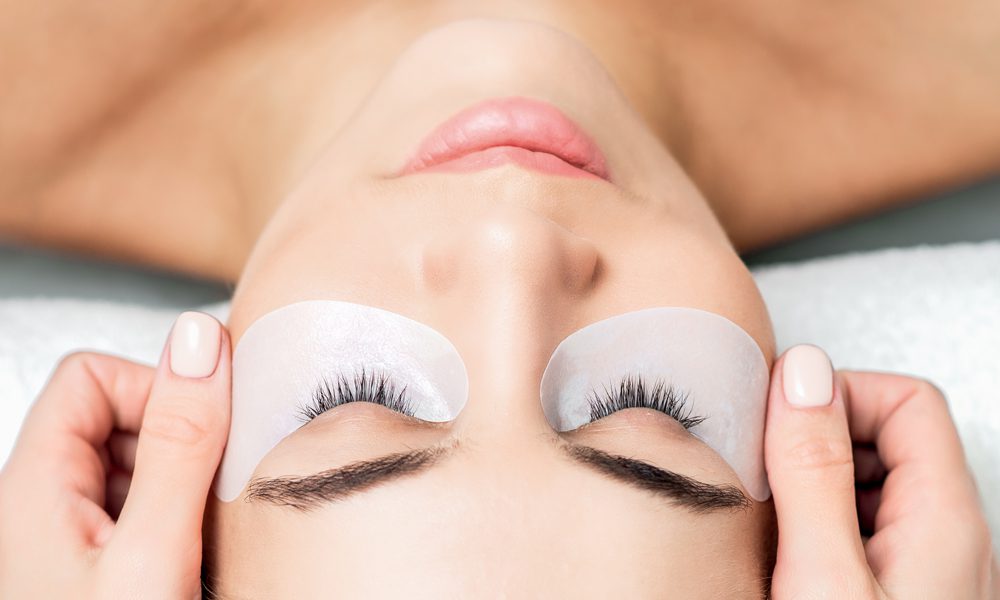
cosmetic tape

Non-medical stick-to-skin products such as fashion tape, breast lift tape and cosmetic tape have grown in popularity as designers and product developers have found new applications for pressure-sensitive adhesives. Products like adhesive bras, hair tape and nipple covers have gone from fashion industry secrets to mainstream consumer goods. But what other opportunities await in a global beauty industry expected to top $716 billion by 2025? Designers looking to craft the next generation of stick-to-skin products will have to overcome a number of challenges to bring innovations to market. Here are some of the most important factors to keep in mind when developing fashion tape and cosmetic tape products.

Autonomy and wearability

One of the biggest issues for designers of fashion tape and cosmetic stick-to-skin products is balancing the need for strong holding power while also ensuring the product is comfortable and easily removable. The products need to stay firmly in place without inhibiting natural movement while avoiding skin irritation. This becomes even more challenging for products intended for significant wear time. Product designers will have to consider the tack, holding power and biocompatibility of various pressure-sensitive adhesive tapes and decide which is best for the intended application. In short, designers have to work hard to cover all their bases when developing products for mass consumer markets.

Moisture management

Skin has a dynamic relationship with moisture. It acts as a waterproof membrane to protect against the elements, but it also creates its own moisture in the form of sweat and natural oils. When you add in lotions and other consumer cosmetic products, you get a compromised surface that presents an added challenge for product developers. Moisture management needs to be a top priority because improper design could inhibit product performance or even cause serious skin damage.

Managing moisture effectively often comes down to the materials selected (including all adhesives and backing substrates) and product design. Designers need to choose materials that either transfer or absorb moisture without trapping it under the tape material and irritating the skin. An experienced converter can help guide these decisions to ensure adhesives stay strong and users stay comfortable in any conditions.

The age of skin

Part of what makes skin such a difficult surface to work with is that it changes from person to person. Age is also a major factor. Skin elasticity and texture, for example, can vary greatly between someone in their 20s and a geriatric person. So, even if a cosmetic tape product isnโ€™t designed to eliminate wrinkles, Designers will still need to account for creased skin during product development.

The age of skin can also make it more susceptible to irritation or damage. So, product developers will need to think critically about the intended audience, their age and what that means for product design and materials.

The brand is everything

Brand names are extremely important in the world of fashion and cosmetics. So, maintaining that brand experience in the physical product is vital for building loyalty with customers. That means manufacturers need to find a converter that has robust printing capabilities in addition to die cutting, materials sourcing and other standard converter services. Printing logos on liners or even directly onto tapes creates yet another touch point โ€” literally โ€” with the brand identity. In addition to branding elements, user instructions, numbering systems and color coding can all enhance the user experience by ensuring a simple, straightforward application process.

Products that let users shine

Users of fashion tape and cosmetic tape donโ€™t think about the pressure-sensitive adhesives and the moisture management characteristics of stick-to-skin materials. They just want to look and feel great. Thatโ€™s why itโ€™s up to the designers and the expertise of your converter to focus on what happens outside the spotlight. By concentrating on the issues presented here and prioritizing user comfort, product developers can overcome the challenges associated with stick-to-skin tape products and create amazing experiences for customers.

Want to improve the way you bring stick-to-skin fashion or cosmetics products to market? Contact The Tape Lab to see how our expansive converting capabilities can make a difference for your business.

Frequently Asked Questions About Tape and Adhesives

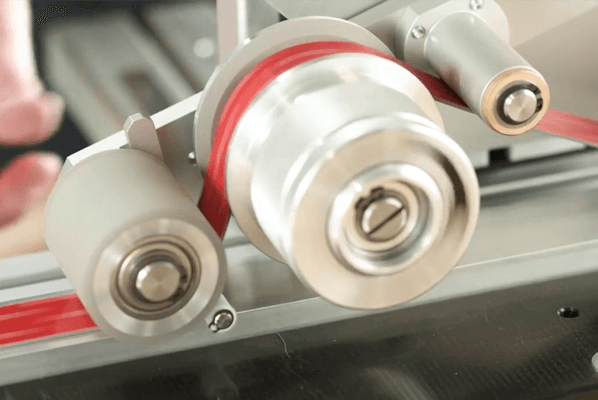
Close-up of a machine with a red belt.

Tape is a product that just about everyone is familiar with, from small children doing arts and crafts to adults who use it at work or in countless applications at home. But as a material to be incorporated in product development, not every engineer is so well versed in tapeโ€™s unique characteristics and capabilities. At The Tape Lab, we get a lot of questions about tape products and pressure-sensitive adhesives in general, and weโ€™re happy to help guide our customers and partners in the right direction. Here are some of the most frequently asked questions about pressure sensitive tapes.

What are ideal storage conditions and how long can tape be stored?

The shelf life of pressure sensitive tape depends on the specific tape in question. But a general rule of thumb is that you can store tape for up to one year without compromising performance, as long as it is stored under the proper conditions. Those conditions are generally between 60- and 75-degrees Fahrenheit with relative humidity.

What do I need to do to prepare surfaces for tape application?

Pressure-sensitive adhesives used in most tape products form a chemical bond with the surface to which they are applied. This is what gives them the holding strength that makes them useful. However, this also means that any contaminants on the surface of the application can compromise that bond because the tape is sticking to those particles, and not the intended surface. For this reason, application sites should generally be dry and free of any substances like grease or oil. If you have a tape need for surfaces that may inherently contain these kinds of contaminants โ€” such as medical tapes where moisture is a primary concern โ€” talk to an experienced converting partner about your options.

Are there minimum widths for slitting tape?

Yes, there are minimums, but the exact specification depends on the equipment used to cut the tape and the material being cut. For example, some converters can cut a standard transfer tape down to around ยผโ€, but the minimum for reinforced transfer tape may be as high as 6โ€. This is why itโ€™s important to vet any prospective converting partner carefully to make sure they have the experience and capabilities you need for your application.


Why are application temperature and service temperature important?

Application temperature refers to the temperature of the environment at the time the tape is bonded to the application surface. Different adhesives used in common tape products have different viscoelastic properties at various temperatures that can affect the strength of the bond. So, if your manufacturing plant is too hot or too cold, the tape may not bond properly.

Service temperature refers to the environment the product will experience after the tape has bonded to the application and is being used. This can also impact performance. So, if the finished product is used in too hot or too cold of an environment, the tape could fail. Taking these kinds of environmental factors into account will be critical when choosing materials during product development.

What are my options for tape backing materials?

Tape backing is the material that holds the adhesive in place so it can be used in various application. Options for backing materials include paper, cloth, film, foam  and others. In double-sided tape, you can think of tape backing as the material between the two layers of adhesive.

Tape backing is different from a release liner that simply provides a means to transport adhesive material until it is applied. Adhesive transfer tapes, for example, do not feature tape backing. An experienced converter can help you choose the right type of backing and release liner for your specific application.

Do liners on a tape matter?

The quick answer is yes. Liners donโ€™t just protect the tape. The liner has different release values in many cases and it plays an integral role in how the tape is applied in applications as well as how it is laminated to other flexible materials. An experienced converter knows how to mix and match liners on tapes to ensure they function well in any engineered application.

Have other questions about tape cutting, converting or tape materials in general? Contact The Tape Lab and weโ€™d be happy to answer any questions and help bring your products from idea to commercial production.

5 common pain points of using industrial tape

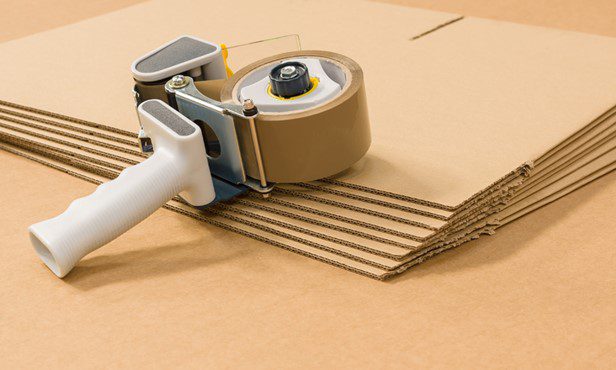
A packing tape dispenser on a stack of cardboard boxes.

The applications for industrial tape are nearly endless. From packaging to bonding plastics and metals to each other to protecting painted or polished surfaces, there are countless tape products available to meet almost any need. But using industrial tape can also create problems if you arenโ€™t thinking carefully about what your needs are and what kind of tape will best fit your application. Here are some of the most common challenges manufacturers encounter when using industrial tape.

1. Tack vs. holding power

Many people think that if a particular industrial tape or adhesive is high tack, it automatically has strong holding power. But thatโ€™s not necessarily the case. Some industrial tape sticks really quickly but doesnโ€™t have the holding power to meet application requirements, particularly for longer durations. Engineers and product developers need to balance those two needs and choose an industrial tape product that has both high tack and high holding power.

2. Surface properties

Choosing industrial tape with the right properties as discussed above is only half of the equation. You also need to consider the properties of the surface the tape will be applied to. Wood, metal, plastic and other synthetic materials all have very different properties that can affect the performance of industrial tape products. Serious issues can occur when using a tape product that wasnโ€™t intended to be paired with that particular surface in a given environment. An experienced tape converter can help product designers and engineers work through these challenges and select the right tape product for the intended application surface.

3. Removing the tape

Some industrial tape is intended to be permanent, with two sides of permanent adhesive, while some is designed to be removed after a period of time. The problem comes when users donโ€™t fully think through their needs and use industrial tape that canโ€™t be removed, only to later realize they actually do want to make changes to the product or application area. For example, if you are using mounting tape to hang a picture or for shower dispenser applications, you need to make sure the tape can be removed without causing serious damage to the application site. Sometimes conditions change where an application that was intended to be permanent suddenly needs to be removed. But the key is to think very carefully about your needs now and into the future and choose the industrial tape product that best fits your application and usage.

4. Tear-ability

Many industrial tapes not only have strong holding power, but the tape itself is extremely strong as well. This is great for some applications, but if you need to be able to tear the product by hand โ€” such as duct tape used in construction โ€” you need to plan accordingly. Using tape that is too strong or requires tooling to cut or tear can cause headaches for certain applications. When choosing industrial tape, consider how the tape will be applied and what that means for your process.

5. Environmental challenges

Heat, moisture and other environmental factors can all impact the performance of industrial tape. When these variables are not considered at the outset, problems can occur. Product developers and engineers need to think critically about what the environment will be for a given application and how that environment might change over time.

Planning prevents problems

Working with industrial tape can provide significant advantages over other kinds of adhesives. But you need to make sure you fully understand your needs and how the tape you choose will affect its performance. By taking time to plan for every stage of the product or application life cycle, you can feel confident you are selecting the ideal industrial tape product for your application.

Need better tape and adhesive solutions for your industrial application? Contact The Tape Lab and our engineers will work with your team to select and develop the perfect industrial tape solution for your needs.

Patient comfort and medical stick-to-skin products

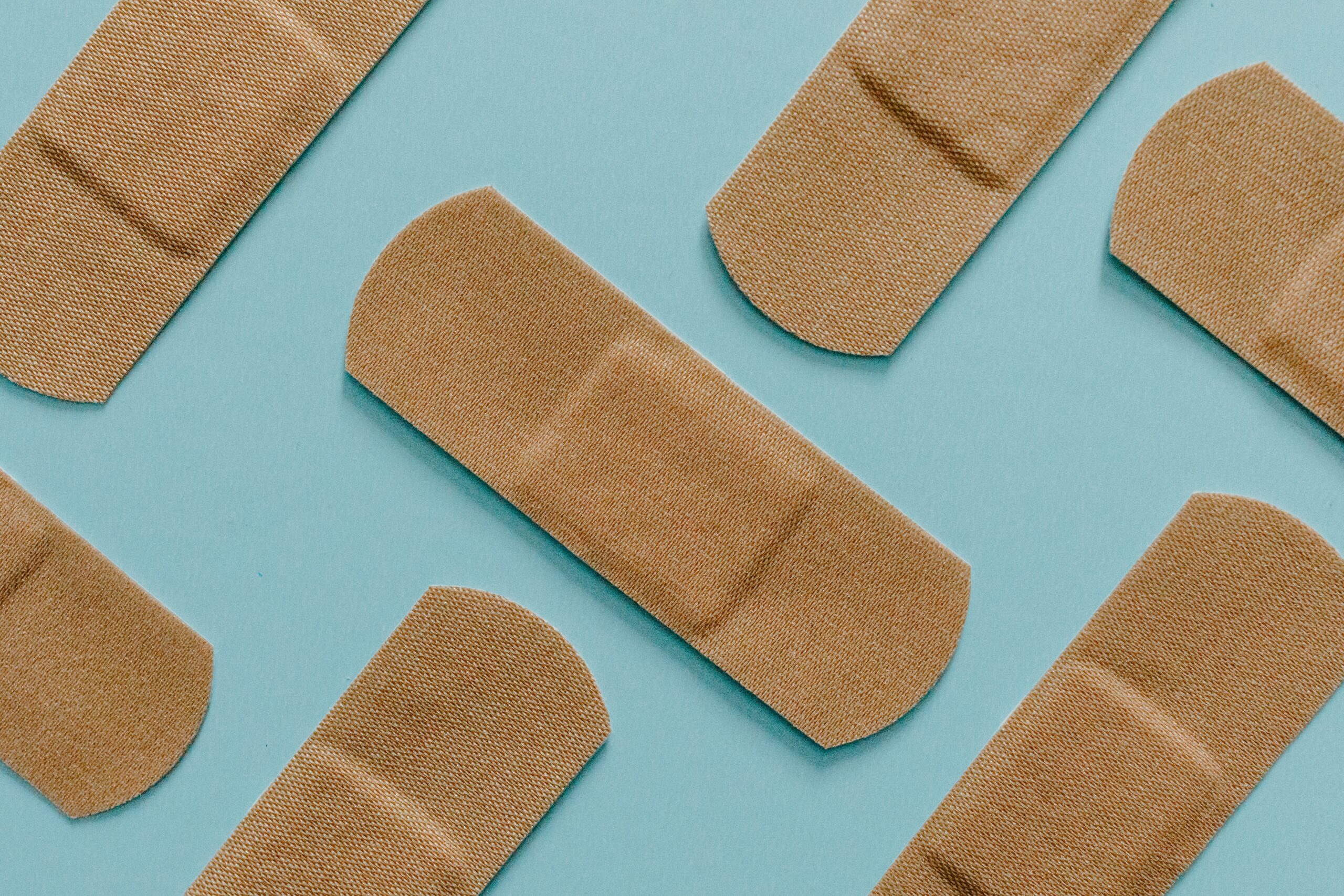
Various sizes of adhesive bandages on blue background.

Medical stick-to-skin products represent a significant opportunity for manufacturers because of how frequently they are used in todayโ€™s healthcare industry. Patient monitors, wound dressings, sensors, surgical tape, diagnostic tape and other wearable adhesive products have all become critical components of modern approaches to patient care. But in order for these products to be effective, manufacturers need to limit patient discomfort as much as possible, particularly for outpatient applications. Not only that, but the complexity of these items make them more akin to consumer electronics goods than other tape products. So, thereโ€™s a lot you need to think about when creating a product that will be successful in the market. Hereโ€™s a look at some of the top issues manufacturers need to consider when developing comfortable and effective medical stick-to-skin products.

The pillars of medical stick-to-skin products

When developing medical stick-to-skin products, there are three main concepts every manufacturer needs to keep in mind above all others:

Autonomy โ€“ In an in-patient setting, medical professionals can assist with applying and removing stick-to-skin medical tape. But for outpatient care, patients need to be able to manipulate devices themselves, sometimes with one hand. So, product developers should use adhesives that wonโ€™t be too painful or difficult to remove while also considering how the liner system and overall design of the product impacts a patientโ€™s autonomy.

Discretion โ€“ There is some expectation in an in-patient setting that medical devices may be somewhat intrusive or would otherwise be considered unsightly in other circumstances. In other words, medical devices arenโ€™t expected to be especially discreet. But for outpatient applications, itโ€™s another story. Product developers need to design products that can be worn discreetly while still achieving intended performance goals.

Mobility โ€“ Regardless of where the patient is, stick-to-skin medical devices need to be designed in such a way that patients can practice normal movements without damaging the device or hindering its effectiveness. Product developers need to consider activities like showering, exercising, sleeping and other natural, daily movements when designing devices and selecting materials.

By developing products with these principles in mind, medical device manufacturers can create comfortable products that work for real-world applications and achieve the desired medical outcome.

Other considerations for medical tape products

Moisture management

Moisture management is important for any stick-to-skin product, but particularly for medical devices. Where wounds and other medical conditions create high moisture environments, keeping the skin as dry as possible can be key to the healing process, protecting skin from becoming damaged and having a direct impact on patient comfort. Therefore, moisture management should be a main consideration for any medical product developer.

Sweat, blood, natural oils, medicated ointments, lotions and other substances create a challenge for medical tape products because they can impact adhesive effectiveness. The key to overcoming that challenge is to select the right adhesive materials for your particular application. In short, there are two ways that adhesives manage moisture: vapor transmission and fluid absorption. Each method has distinct advantages and disadvantages, so selecting the appropriate approach will depend on the specific function of your device. An experienced engineering professional can help you select the right medical adhesives materials for each layer of your product to achieve the desired outcome.

Skin as a surface

Part of what makes medical stick-to-skin products so challenging to develop is that skin is an incredibly dynamic surface. Cells are constantly regenerating, the body exudes fluids, the age of skin impacts its properties and the entire surface is elastic. Accounting for all of these factors is no easy feat. So, partnering with a converter that has experience in the medical industry can help you go from concept to commercial production by offering guidance and support throughout the product development cycle.

Optical clarity for site checks

If treatment providers need to be able to visually inspect the application site without removing the stick-to-skin product, you will need to choose optically clear materials, including your adhesives. This type of product need should be identified early in the development cycle so you can streamline materials selection and bring your product to market faster.

Whether youโ€™re developing a new type of bandage or a truly revolutionary product that will forever change the practice of medical care, patient comfort always needs to be a top consideration. That starts with selecting the right materials and making the right design decisions. By staying focused on both patient and product needs, you can develop great medical products that help improve the lives and health outcomes of your users.

Have an idea for a stick-to-skin medical device? Contact The Tape Lab and our experienced engineers can help enhance your process from concepting to commercial production.

The importance of converter experience and service excellence

Industrial Customized Adhesive Products

When searching for a tape converter, the most important factor to consider is obviously whether a company has the converting capabilities you need. Do they have the right equipment, sufficient capacity and personnel to get the job done? But in truth, any converter worth their salt will generally have the same overall capabilities, outside of specialty needs. So, the real difference between converter companies lies in their experience, the quality of customer support they can provide and their relationships with the material suppliers whose products they convert for your application. These factors provide real value to customers and should be considered thoughtfully as you make your decision.

The value of experience

Whether youโ€™re looking to create products for the healthcare industryindustrial markets or fashion and entertainment industry, you canโ€™t discount the value of an experienced tape converter partner. A company that has true expertise in materials science will be able to create efficiencies and control costs from prototype concepting all the way through commercial production. A staff of true engineering professionals will be able to help you identify solutions with product design, selecting the appropriate materials and anticipating problems before they impact project timelines. This will reduce the overall cost of product development and help increase speed to market.

When a converter not only understands your product needs, but also the industries youโ€™re targeting, they can offer advice on design and materials decisions so you can create products that truly make an impact in the market. But that level of understanding only comes from experience.

Experience can be a hard thing to qualify, but there are signs that a converter has the experience and expertise you need to create quality products with speed and efficiency. Here are some things to look for when searching for an experienced tape converter:

Relationships with suppliers โ€“ Do they have strong partnerships with leading materials suppliers so they can help you source materials at scale and ensure they will be able to deliver those materials on time and in sufficient quantities?

Understanding of process from prototype to scale โ€“ Can they help with the entire product development cycle or are they only equipped to execute finished designs?

Quality certifications for your target industries โ€“ Do they have the proper qualifications to ensure you are meeting all regulatory requirements?

Support can be critical

Every manufacturer in the market today relies on a host of vendors โ€” from software providers to marketing agencies โ€” to help run their business. But when you encounter a problem in your product development process, you donโ€™t need just another vendor. You need a true partner. The level of custom support a converter provides can be critical for keeping project timelines on track and helping you work through major issues.

When evaluating potential partners, consider this: When you pick up the phone to make a call, do you have direct access to engineering professionals who can help you solve problems on the spot? Or will you be talking to customer service reps who simply manage calls, and youโ€™ll have to wait for someone more knowledgeable to get back to you? When speed is a necessity, you canโ€™t sit around waiting for answers. In these instances, the level of support a company provides has a real and immediate impact on your ability to deliver the project on time and achieve product performance goals. Be sure to ask any potential partner about their full service, end to end engineering and support services and how they will be able to nurture your project from start to finish.

The right tape converter is out there

When looking for a tape converter that can meet your needs, itโ€™s important to go beyond the specific services they offer. By also considering a companyโ€™s experience and support, you can eliminate a lot of headaches and streamline product development. Asking the right questions and not settling for just another vendor will allow you to stay within budget, speed time to market and ultimately achieve your product goals.

Looking for a true converting partner you can count on? Contact The Tape Lab to see how our experienced team can help bring your ideas to life.

The importance of choosing the right adhesive for stick-to-skin medical devices

medical wearable device

Producers of stick-to-skin medical devices have to make a lot of choices as they work to bring products from design concept to commercial production. But one of the most important decisions involves your choice of adhesive material. Because the adhesive you use has a direct impact on patient comfort and product performance, itโ€™s critical you weigh your options carefully and find a partner that can help guide your selection. Here are some of the top considerations in choosing stick-to-skin adhesive materials and how the right medical converting partner can help improve product design.

How does the adhesive manage moisture?

Perhaps the most important factor for medical wearable devices is moisture management. Adhesive materials have a variety of ways to manage bodily fluids like sweat, oil, blood and others. The two most common forms of moisture management are fluid absorption (where the adhesive actually takes on the moisture and holds it away from the skin) and moisture-vapor transmission (where tiny holes in the adhesive material allow moisture to evaporate). Both kinds of materials have advantages for different applications.

However, you need to consider the design and construction of the entire device. A breathable adhesive that allows fluids to evaporate wonโ€™t be suitable if materials in outer layers of the product prevent moisture transmission. A converting partner can help you think holistically about your materials and design needs and make recommendations to ensure consistent product performance.

Is the adhesive material skin-friendly?

Itโ€™s an issue faced by every producer of stick-to-skin medical devices: The adhesive needs to be strong enough to stay securely fixed as the patient moves, but it also needs to limit skin irritation as much as possible. This is particularly important for devices designed for patients who may have more sensitive skin or where maceration is of particular concern.

Using 2-in-1 products can help solve this problem as they feature different adhesive materials for the skin-contact layer and construction layer, or tie-layer. However, youโ€™ll need to make sure these materials work in harmony as different adhesives can sometimes be incompatible. An experienced converter can advise your engineers on how to find the perfect balance to ensure product performance and patient comfort.

Does it offer optical clarity?

Do medical professionals need to be able to visually inspect the application site without fully removing the device? If so, youโ€™ll need an adhesive that offers visual clarity while maintaining the integrity of the device. This is also important in situations where light sensing is required. Medical converters can make suggestions for adhesives that offer both strength and visual clarity.

How long is the product wear time?

Is the product designed for long wear times (up to three weeks) or short-term use (less than 30 minutes)? The longevity of the finished product is directly tied to your adhesive selection, making the material you choose a critical component of the productโ€™s end use. Engineers and converters should collaborate to select adhesive materials that match the intended wear time.

Is the material scalable?

As you look to gain market share with new products, you need to make sure that every aspect of production is scalable to meet your growing need. That includes your adhesive. So, you want to make sure your selection will not only be available in large enough quantities, but you also need to make sure your converting partner is capable of converting materials at scale. This means they have strong partnerships with materials suppliers and have the production means to ramp up quickly and provide fast turnaround from design concept to prototype to commercial production.

The adhesive materials you choose for stick-to-skin medical devices have a direct impact on product performance, patient comfort and your ability to produce products at scale. This is why you need to consider all factors carefully when making decisions on materials. An experienced medical converter can use their expertise to help guide your selection of adhesives and create products that make an impact in the medical market.

Looking for a converting partner that can help bring medical devices to life with consistent quality and speed? Contact The Tape Lab to see how our experienced team can help you convert your ideas into powerful products.