Navigating FDA Requirements: A Guide to Adhesive Compliance in Medical and Wellness Products

A red ribbon with the fda approved seal.


A black and white picture of an x
FDA Approval Process

A black and white picture of an x

Understanding regulatory requirements for adhesive components can mean the difference between a successful product launch and costly delays. Whether you’re developing a medical device or a nutraceutical delivery system, knowing your regulatory pathway is crucial.

Understanding Your Product Category

Different products face different regulatory challenges:

– Medical Devices: Full FDA compliance pathway

– Nutraceutical Delivery Systems: Dietary supplement regulations

– Cosmetic Applications: Cosmetic regulatory framework

– Wellness Products: General product safety requirements

Each category requires specific documentation and testing protocols.

Biocompatibility Testing: What You Need to Know

Even for non-medical applications, skin safety is paramount:

– ISO 10993 testing considerations

– Cytotoxicity evaluation

– Sensitization testing

– Irritation assessment

– Wear time validation

Understanding these requirements early prevents costly retesting.

Documentation Best Practices

Successful compliance requires robust documentation:

– Material specifications

– Manufacturing protocols

– Quality control procedures

– Testing data

– Supplier certifications

Our experience shows that organized documentation can accelerate your timeline.

Common Submission Pitfalls

Avoid these frequent compliance challenges:

– Incomplete testing data

– Insufficient material documentation

– Inadequate manufacturing controls

– Missing biocompatibility assessments

– Poor change control procedures

Early planning helps navigate these potential obstacles.

Timeline Optimization Strategies

Smart strategies can accelerate your compliance process:

– Early regulatory pathway determination

– Parallel testing protocols

– Strategic material selection

– Proactive documentation preparation

– Expert consultation utilization

Success Case Study

A recent wellness product launch demonstrates effective compliance navigation:

– Challenge: Complex adhesive requirements for skin contact

– Solution: Strategic material selection and testing plan

– Result: Successful launch with complete documentation

– Timeline: 40% faster than industry average

Expert Support Available

Understanding and navigating these requirements doesn’t have to be overwhelming. Our team of experts can guide you through the process, ensuring compliance while optimizing your development timeline.

Visit us at MD&M West Booth 2246 for a personalized consultation on your regulatory pathway. Our experts will help you develop a strategic plan for compliance success.

Click Here to Book Your Regulatory Consultation at MD&M West
Unveiling the Extraordinary: The Tape Lab’s Role in Developing a Bio Wearable from Concept to FDA Approval

Unveiling the Extraordinary The Tape Lab's Role in Developing a Bio Wearable from Concept to FDA Approval

Unveiling the Extraordinary: The Tape Lab’s Role in Developing a Bio Wearable from Concept to FDA Approval

Introduction: Welcome to The Tape Lab blog, where we explore the remarkable stories surrounding adhesive tape and its influence on diverse industries. In this article, we delve into the captivating insights shared by our adhesive expert, Jason Zajac, during PTSC’s Tape Week 2023. Join us as we delve into the extraordinary journey of a biotech company and The Tape Lab, collaborating to revolutionize the healthcare landscape. 

The Biotech Breakthrough: In a world propelled by data scientists and electrical engineers, a visionary biotech company emerges with an algorithmic software and device set to redefine healthcare. However, this groundbreaking innovation faces a unique challenge โ€“ it must securely attach to the human body.

Discovering The Tape Lab: With limited knowledge about tape, the biotech company turns to Google to find an adhesive solution, which directs them to The Tape Lab. The consulting expertise and deep understanding of medical tape captivates their attention, prompting the biotech company to forge a collaboration with The Tape Lab.

Unleashing the Magic of Tape: Through meticulous inquiry, The Tape Lab works to identify the ideal adhesive solution for the innovative device. Beyond proposing design modifications, they dive into short and long-term prototyping strategies, ensuring scalability for production. In strict adherence to the rigorous Biocomp 10993 standards encompassing cytotoxicity, sensitization, and irritability, The Tape Lab prioritizes the device’s safety and compliance.

Prototypes and Partnerships: The Tape Lab works to craft prototypes that incorporate the envisioned materials and designs. Multiple iterations throughout the development process allow for continuous refinement. Recognizing the crucial role of specialized manufacturers, The Tape Lab strategically recommends partnerships with Medical Converters, leveraging their expertise in complex multi-layer die-cut parts and layout considerations.

Navigating Biocomp Testing: To ensure both compliance and longevity of the device, The Tape Lab works closely with the biotech company to develop meticulous testing protocols. These protocols encompass not only the device’s requirements but also the adhesive tape that adheres to it. By sourcing reputable testing facilities to evaluate the device-tape combination, The Tape Lab fine-tunes designs, adhesives, and liners based on rigorous testing outcomes, ensuring optimal performance, and mitigating potential production hindrances.

Towards FDA Approval: The Tape Lab meticulously assembles all the necessary documentation (for the adhesive) for FDA submission, including comprehensive Biocomp data for materials in contact with the skin. Leveraging prior use cases involving similar materials, The Tape Lab aids the biotech company in preparing their 510K paperwork. The FDA submission initiates an intricate waiting game, featuring several meetings where the biotech company defends the merits of their device, with The Tape Lab providing invaluable input on adhesive properties and Biocomp testing protocols.

The Final Stages: The journey continues as the biotech company progresses through the FDA validation phase. During this crucial stage, The Tape Lab collaborates closely, assisting in establishing converter setups, developing packaging, specifying tooling, and outlining the conversion, assembly, and pack-out processes for the devices. Ensuring adherence to stringent requirements such as First Article inspections and IQ/OQ/PQ processes for tooling and machines, The Tape Lab guarantees that the adhesive portion of the parts meets the highest standards.

The Triumph: Finally, upon FDA approval of the biotech company’s 510K submission, the converter is ready to commence production. 

Conclusion: The extraordinary journey of biotech companies and The Tape Lab serves as a testament to the power of adhesive tape in revolutionizing healthcare. Through unwavering dedication, meticulous testing, and strategic partnerships, they skillfully navigate the complexities of FDA approval, paving the way for a groundbreaking device that will shape the future of healthcare as we know it.

Insights from Jason Zajac at PSTC Tape Week – A Must-Attend for PSA Pros

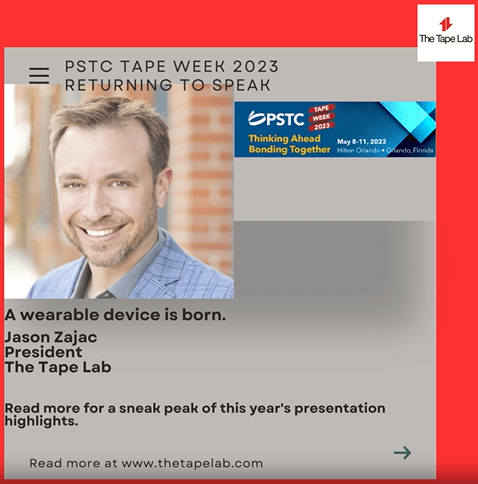
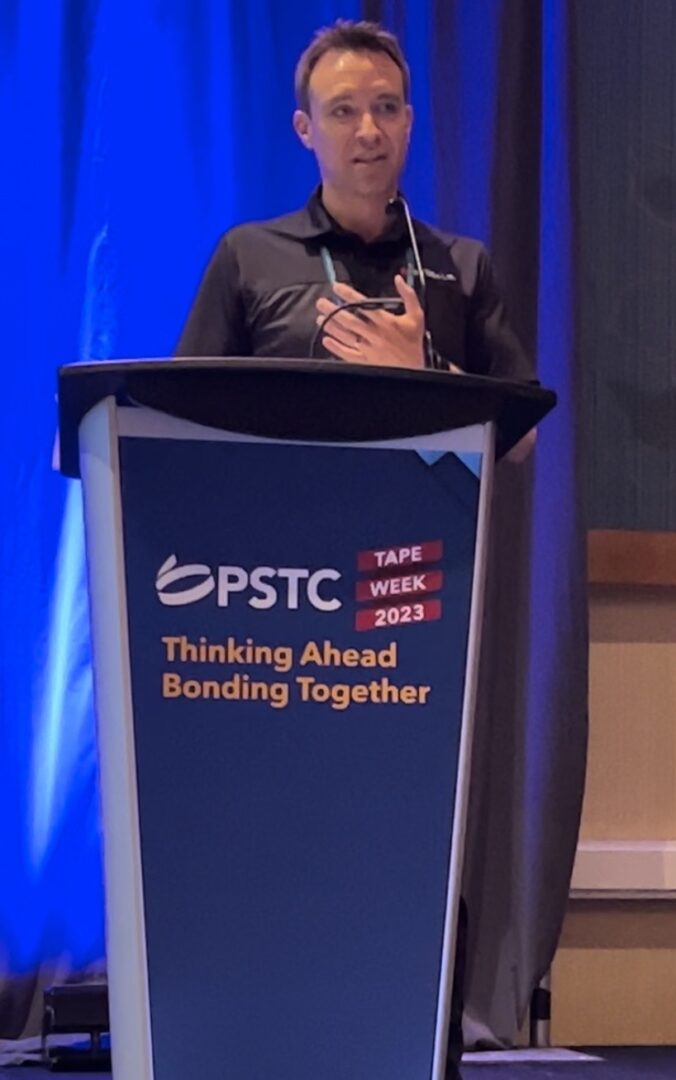
Jason Zajac, President of The Tape Lab, with a wearable device.

Exciting news! Jason Zajac, our President, is returning to PSTC Tape Week next week to share his insights on developing wearables ready for market. This event is far from your traditional networking exercise, as its primary objective is to unite tape manufacturers, adhesive makers, and engineers from the pressure-sensitive adhesive (PSA) industry under one roof. By doing so, PSTC Tape Week fosters niche-specific knowledge sharing and provides segmented learning and growth opportunities for PSA professionals.

National Sleep Week and Tape — Innovations we saw at CES 2023.

National Sleep Week and Tape

Highlights from CES 2023

Consumer Electronics Show (CES) is probably the most significant trade show when it comes to consumer tech. From mobile phones to fitness trackers and everything in-between, it showcases how tech could revolutionize even the smallest aspects of our lives โ€“ giving us a glimpse of what the future may hold. 

Held in Nevada, Las Vegas, this yearโ€™s edition was held in January. Our team had a chance to visit, and we experienced some great consumer tech specifically around new innovations for sleep wellness.

Wearable Tech โ€“ seemed to be the core theme of the event as we moved from one booth to the next. Apple, Abbot, Samsung Garmin, and others โ€“ everyone seemed to be competing for a few centimeters of space on probably the most exclusive real estate โ€“ the human body.  We elaborate in a different article about all wearable tech, but this one is specifically highlighting wearable tech in the sleep wellness space.

So what exactly is wearable tech? As the term implies, it refers to portable, tech-driven products meant to be worn during our daily and nightly routines. The primary goal is to make it quick, easy, and cost-effective to evaluate, monitor and improve key health & wellness indicators.  The more we know about our daily and nightly bodily functions the better we can lean into our sleep wellness.

The sleep wellness devices/wearables we saw It can be categorized into 3 broad groups:

  1. Wrist Wearable Devices โ€“ Probably the most ubiquitous form of wearable tech, wrist wearable devices come in various forms such as wrist bands, wrist watches, and wrist patches. Depending on what the user wants, they offer a wide range of medical & fitness evaluation capabilities focused on how much energy you exude daily vs how much sleep and rest you need to recover.
  1. Head-Mounted Devices โ€“ Products like the Muse Brain Sensing Headband which Uses advanced EEG technology to respond to your mind, heart, and breath, Muse is a brain sensing headband that helps you understand & track how well you focus, sleep and recharge so you can refocus during the day and recover each night.  Also, according to AYO Innovation Consulting, a product called UMindsleep is the worldโ€™s first ultra-lightweight home-use brain-computer interface sleep monitor that has functions such as real-time sleep staging, accurate positioning of problems, intelligent solutions, improvement effect tracking, and hundreds of indicators recording, giving users a variety of intelligent experiences.
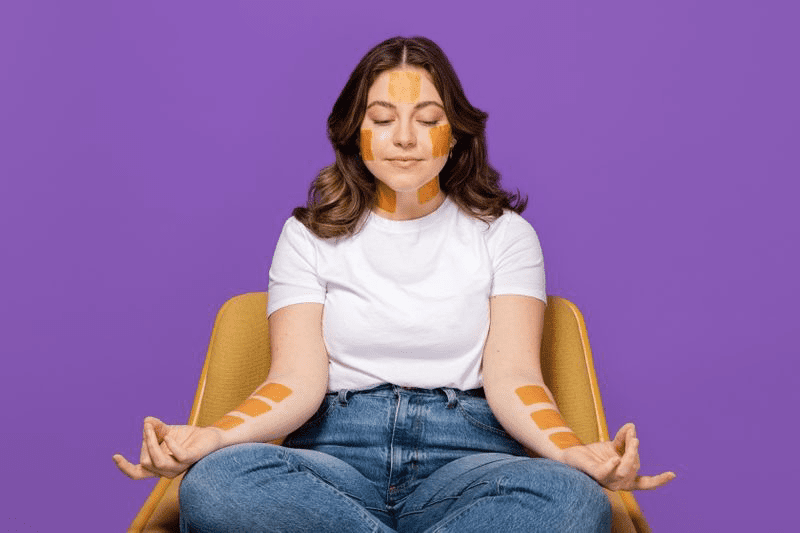
  1. Transdermal Patches โ€“ According to the popular Cassandra Report stick-on-skin nutrient patches have catapulted in popularity not only for being discreet, quick, and convenient but because itโ€™s super easy to use – patches are fast becoming a respected and popular addition to aid wellbeing with a focus on sleep and relaxation.  The patches are lined with nutraceuticals that aid in sleep like Melatonin and Ashwagandha that are absorbed thought the skin from the patch.

What The Future Holds  

Currently, the global market for wearable tech is worth over USD 61 billion. Whatโ€™s more important is the fact that the industry is expected to grow at a robust 14.5% annually at least until 2030 โ€“ a great indicator signaling wearable techโ€™s growing acceptance at both the enterprise and consumer levels. And it was quite evident from this yearโ€™s CES as almost every player in the consumer electronic space is willing to spend significant human and financial capital to secure their share of the wearable tech pie.       

The Role Of Reliable Adhesive Solutions In Brining Quality Wearable 

Devices To The Market

Wearable devices must be sturdy enough to take daily wear and tear and must also be able to seamlessly blend in with the userโ€™s sleep and daily routines.  A well-engineered adhesive solution ensures that the device stays securely attached to the patientโ€™s body for the required period. Hereโ€™s how advanced adhesive solutions can significantly boost the usability & reliability of these devices:     

  • Makes It Suitable For An Active Lifestyle: The core purpose of such devices is to monitor the userโ€™s health indicators with minimum invasion. A reliable adhesive ensures that the device can withstand sweat, moisture, and occasional bumps with no impact on its effectiveness.         
  • Ergonomics & Comfort: Most people are not comfortable with the idea of sticking a device to their bodies for extended periods. However a well-designed adhesive makes sure that the device doesnโ€™t leave skin rashes or causes irritation and is comfortable to wear.  

The Importance Of A Reliable Conversion & Production Partner

No enterprise can survive within the wearable space without bulletproof credibility. This means your team up with a proven production and conversion partner that brings outstanding R & D capabilities to the table.

The Tape Lab checks all of these boxes. Letโ€™s take a closer look:

  • Trusted By Global Wearable Medical Tech Brands: The Tape Lab brings to the table over 18 years of research & manufacturing experience in the stick-to-skin medical tech space. Some of the largest names in the industry such as Avery Dennison have entrusted us with developing adhesive solutions for some of their flagship partners. Weโ€™re supremely confident we can meet and exceed your expectations as well. 
  • Strong Supplier Partnerships: What sets us apart is our rock-solid supply chain. We enjoy strong relationships with leading material manufacturers in the medical adhesive space. Our partners include 3M, Avery Dennison, Berry Plastics, and Polymer Science. This ensures immediate material access and enables us to design and produce customized medical adhesive solutions far quicker and cheaper than most of our competitors.
  • Unrivaled Adhesive Engineering & Production Expertise: The Tape Lab excels in every facet of adhesive design and manufacturing. Our core competencies include designing the tapes, die-cutting the patches, layer lamination, customizing the liner releases, and full-service OEM assembly. We’re equally proficient in the design, manufacturing, and packaging of stick-to-skin wearables. Moreover, each tape component is manufactured in our ISO-8-certified clean rooms. 

Next Step โ€“ Book A Free Consultation 

Looking for a full-service tape converter and adhesives specialist? Contact The Tape Lab today. Our experts will schedule an obligation-free call and explain how we can put our full suite of converting services to work for you.ย  Contact Us

History of Transdermal Patches sleep week version

History of Transdermal Patches sleep week version

A Brief History On Transdermal Patches & How They May 

Transform The Way We Approach Sleep Wellness   

Transdermal or topical skin patches have gained quite a bit of traction in the recent past โ€“ as an efficient tool to enhance your health and as an innovative mechanism for drug delivery within the wider healthcare landscape. All you have to do is to stick it on your skin and it will release the drugs or health-boosting nutrients in a controlled manner.

Today, weโ€™ll take a walk through their historical evolution and explore how these tiny stick-on patches made from paper-thin films may write a new chapter for sleep wellness.     

How It All Started 

We wouldnโ€™t fault you if you believed that transdermal patches are a recent invention or a latest wellness fad that may soon vanish.

Guess what? Transdermal application methodologies have been in existence long before mankind discovered modern medicine and drug delivery mechanisms such as injections and pills. A quick glance at Wikipedia will reveal that we were applying homemade lotions and ointments as early as 3000 BC. 

However, it was quite a while before modern medicine took notice and started considering topical patches as a viable drug delivery technology. It was 1979 when Food and Drug Administration (FDA) gave the nod to Scopolamine โ€“ the initial transdermal option to manage motion sickness. 

Its First Blockbuster Moment

Transdermal patches first came to mainstream attention as a tool to affect smoking cessation, when in 1984, researchers in UCLA came up with a nicotine patch. Interestingly the researchers used their own bodies to see if the newly developed nicotine patch delivered the intended result and is safe for human use. However, it was 1991 when nicotine patches were made available to the general public.      

Are They Any Good? 

Absolutely. They have certainly shown promise and have clear advantages.

For example:

  • A patient may have to take pills and injectables several times a day and thereโ€™s always this risk of missing the dose. Whereas modern transdermal patches can be worn anywhere from 8 hours to a week. Therefore, giving you a โ€œset & forgetโ€ option. 
  • They deliver the drug in a controlled manner therefore allowing the body to actually absorb the nutrients rather than be flooded with them and discard most of the benefit
  • Moreover, patches are non-invasive and infinitely more comfortable than getting pricked with a needle or popping foul-tasting pills  
  • Theyโ€™re extremely easy to use because you donโ€™t require professional oversight to apply a patch as compared to being administrated an injection from qualified healthcare provider.   
  • More recently, transdermal patches have emerged as a handy accessory for mental and physical wellbeing. From better sleep quality and post-workout recovery to stress reduction and skin rejuvenation, there are plenty of ways patches may enhance your quality of life.    

What The Furfure Holds 

The market for transdermal patches

Whether youโ€™re talking about B12 patches, melatonin patches or even delivery systems for manuka honey, transdermal patches are in high demand. Overall, the market for transdermal patches was estimated at around $17.6 billion in 2020. Projections show that growing to around $30.5 billion by 2026.

Many companies are looking at manufacturing sleep and calmness patches to feed a market that needs better sleep solutions. 

This is where a tape converting partner can provide significant value. Instead of reinventing the wheel and incurring all the associated costs, a converter can provide tried-and-true methods that speed product development and eliminate headaches in the process.

Converting services for transdermal patches

Transdermal patch development is almost always easier, faster and cheaper when done in partnership with a tape converting services company. Thatโ€™s because an experienced tape converter that can both formulate custom adhesives for transdermal patches and has the capabilities to die cut and package your patches can assist at nearly every stage of the product development process โ€” from prototyping to packaging.

An experienced converting partner can help you:

Design your transdermal patch

  • A knowledgeable converter can help you design a delivery system (i.e., matrix patch or pre-dosed patch) that can deliver the intended therapeutic through the adhesive layer.
  • Sizing of the patch and location on the body for the patch are paramount in the success of the product. An experienced tape converter who knows the transdermal and stick-to-skin market is essential for the success of your overall design.

Select the right type of pressure sensitive adhesive

Ensure consistency in the finished product

  • Consumers expect (and regulators demand) a consistent payload or dosage from transdermal patch products.
  • Reliable converting processes help ensure each patch delivers a consistent experience.

Choose materials for the carrier and liner layers

  • A converter with ties to major suppliers can help you source the premium materials you need to make products that stand out in the marketplace.
  • Extended tape liners make products easier to apply for consumers.
  • A converter with full packaging resources can be your full turnkey solution to launching and maintaining a consistent supply chain.

Cut materials to the desired shape

  • Whether you want squares, ovals or a butterfly shape, a converter with an array of die cuttingslitting and sheeting capabilities can create the ideal shape for your application.
  • A trusted partner can also help organize production to cut down on wasted material.

Streamlining product development

Transdermal patch development is a complex process with a lot of hurdles to overcome before you can get products into the hands of your customers. Thatโ€™s why the best go-to-market approach is often to seek out a converting partner that offers full service private labeling for every aspect of your patch. For example, The Tape Lab can formulate safe stick-to-skin adhesives, laminate materials to create the finished patch, die-cut patches to the appropriate size and even package products for patch manufacturers. This allows us to act as a one-stop shop for all your transdermal patch production needs. Consider partnering with a trusted converter early in the product development process so you can streamline manufacturing and achieve commercial production faster.

Are you looking to develop transdermal patches and expand your business? Contact The Tape Lab and put our knowledge and industry-leading capabilities to work for you.

How CGM Cover Tapes Are Making Diabetes Management Easier

blue ribbon with text "November is Diabetes Awareness Month"

Over 10% of the American population has diabetes and almost 1 in 3 Americans have pre-diabetes. Living with diabetes requires you to constantly track your blood sugar levels. Over the years the approach to diabetes management has steadily evolved.

Weโ€™ll take a closer look at how modern CGM devices are empowering the masses to lead a normal life with diabetes and the role CGM cover tapes play in improving the efficacy of CGM devices. ย ย ย ย ย ย ย ย ย ย ย 

Whatโ€™s A CGM Device?

Traditionally patients have had to rely on manual finger pricking to monitor their blood glucose. CGM devices are simplifying the process by making it quick, automated, and more accurate.

โ€œCGMโ€ stands for Constant Glucose Monitors. It is a wearable device that gives patients the ability to track, monitor, and regulate their insulin levels. They adhere to a personโ€™s skin with biocompatible adhesive tape patches. The device has a lancet that penetrates the epidural layer of the userโ€™s skin and can monitor the userโ€™s blood glucose for up to 14 days.

The Role Of CGM Cover Tapes In Diabetes Management  

Modern CMG devices are being manufactured for wear times as long as 21 days on the human body. This necessitates an extra layer of protection for the device for day-to-day activities. The term โ€œcover tapeโ€ indicates just that โ€“ a tape to cover and protect the CGM device from water, dirt, and debris during daily use.

Cover tapes are typically Polyurethane (PU) single-sided tapes that stretch over the top of the CGM device on the skin to give the device an extra layer of protection. They act as a barrier for the CGM device and the stick-to-skin patches the device is attached to. Cover tapes can be designed for single-use (one day), or adherence for up to 14+ days.

As the masses embrace CGM devices for diabetes treatment, there has been a steady demand for uniqueness and self-identification with cover tapes. The cover tape aftermarket has witnessed sharp growth as more than 100 million CGM devices are expected to be sold in the US alone in 2022.  

Many aftermarket manufacturers provide โ€œfashionableโ€ cover tapes in unique patterns and custom prints that make a statement. There are plenty of options for every price point ranging from inexpensive K-Tape material to PU non-woven fabrics, which offer excellent wear time and comfort while keeping the device securely adhered to the userโ€™s body.

What Sets Apart The Tape Lab As A Production Partner  

  • Extensive Industry Experience

The Tape Lab brings to the table over 12 years of research & manufacturing experience in the CGM and Cover Tape space. Some of the largest CGM manufacturers rely on our engineering expertise to develop and bring their CGM tapes to the market. Weโ€™re supremely confident we can help you achieve the same.     

  • End-to-end Cover Tape Design & Manufacturing Services 

The Tape Lab excels in every facet of CGM cover tape design and manufacturing. Our core competencies include designing the tapes, die-cutting the patches, laminating the layers together, customizing the liner releases, and full-service OEM assembly and packaging services of CGM patches โ€“ no matter what your specifications.

We’re equally proficient in the design, manufacturing, and packaging of stick-to-skin wearables and the CGM devices are one of our most prolific areas of expertise. We thoroughly understand the role biocompatibility play in the effectiveness of the tapes. Moreover, each tape component is manufactured in our ISO-8 certified clean rooms.

  • Quick Turnaround & Access To Core Materials

Most well-known CGM tape manufacturers choose us as a product development partner because of our strong relationships with leading material manufacturers in the medical adhesive space such as 3M, Avery Dennison, Berry Plastics, and Polymer Science. This ensures continuous material access and enables The Tape Lab to design and manufacture your CGM Tape products quicker, cheaper, and without any deviations from your design specifications.

Next Step โ€“ Book A Free Consultation

Looking for a full-service tape converter and adhesives specialist? Contact The Tape Lab today. Our experts will schedule an obligation-free call and explain how we can put our full suite of converting services to work for you.  

The Avery Partnership

Compass pointing to a "trusted partner" text

People often ask โ€œdo relationships matterโ€ in business. The simple answer is yes. This is particularly true in the ever-evolving medical device space. The Tape Labโ€™s Engineers pride themselves on having trusted relationships with the best material vendors and medical ISO 13485 converters.

Relationships like the one we have with Avery Dennison Medical help us design, develop and manufacture our clientsโ€™ ideas into medical products. Working with many of the leading medical companies in the wearable and remote patient monitoring space, we specialize in creating stick-to-skin devices for our clients. 

In early 2021, The Tape Lab was hired by the leader in continuous health monitoring and clinical intelligence to help develop a stick-to-skin solution for their remote patient monitoring device platforms. The company had a first-generation device that utilized a skin and tie-layer adhesive that were underperforming.

They were not achieving the optimal wear time or performing to their standards. Once The Tape Lab was consulted, we quickly were able to develop a scope of work to design and manufacture a 10โ€“14-day adhesive patch system to allow their device to continuously monitor their patients (remotely).

The Tape Lab was able to take use our many years of experience with long term wear adhesives as well as the vendors of the adhesives and design a solution that exceeded the customers specifications.

Their remote patient monitoring device was designed to adhere to human skin for 10-14 days without falling off or allowing moisture to build up and impact the deviceโ€™s performance. Their active patients would be exercising, showering, working, and living their normal life while the device was adhered to their skin.

We also needed to design a tie layer of adhesive to the device that would be tough enough to endure the same day-to-day activities, and after the 10โ€“14-day wear time remove cleanly from the device after usage. Finding the right combination of materials was a challenge.

The overall design was a collaboration between The Tape Lab and its material vendors and converting partners. One material vendor that was instrumental in the success of the remote patient monitor device was Avery Dennison Medical.

The long-standing relationship between The Tape Lab and Avery Dennison Medical was key to getting the right products specified on the customerโ€™s platform.

Avery Dennison Medical is a medical materials supplier with a large portfolio of skin contact and tie layer tapes in a variety of constructions and adhesives. They also have a testing lab where they can do a full range of approved ASTM, PSTC and ANSI testing of tapes to different materials to ensure the products that are being designed for applications are validated using methods established in our industry.

When The Tape Lab was doing their diligence in gathering application details they brought in several tapes, films, liners and hydrogels from several material vendors to qualify on the device. The Tape Lab team knew that in-order to achieve a 10-day wear time for the device they needed to source materials that could handle the rigors of daily life with the device fully attached to patients of all sizes, demographics and worldly climate conditions.

With the help of Avery Dennison Medicalโ€™s on-site material testing lab, The Tape Lab was able to design the multi-layer patches and validate their longevity across a multitude of harsh tests that taxed the materials to ensure they could withstand the 10+ days of wear time.

The Tape Lab had to source materials, design the multi-layer lamination method, design the actual device patch shape, and size, and find a liner solution that was easy for a patient to use.

The Tape Lab deployed a rigorous process to developing and designing the remote patient monitoring patch.  The customerโ€™s platform had several iterations of the patches for different monitoring situations, each of which needed their own bench testing and wear studies for validation. The Tape Lab worked on all the development and specification writing for the testing.

After several months of testing, the customer evaluated the results and chose an Avery Dennison Medical product for the stick-to-skin and tie layer materials for the remote patient monitoring platform.

Today, the customer is launching their two production parts with volumes in the millions and gaining worldwide traction in their industry. The Tape Lab, with the collaboration of Avery Dennison Medical, successfully helped their client in all phases of the product development and production launch of their remote patient monitoring platform. 

The Tape Lab is a specialty design, development and manufacturer of adhesive backed products. They specialize in helping clients with stick-to-skin applications. The Tape Lab also serves the consumer and general industrial markets.

The Tape Lab team has over 18 years of experience in both the manufacturing of the tapes and the converting of the materials into finished products. The Tape Labโ€™s differentiator is their relationships with their material vendors and their converting partners. The President of The Tape Lab is Jason Zajac. 

Avery Dennison Medical is a materials science and manufacturing company specializing in the design and manufacture of adhesive-coated materials for medical devices. With more than four decades in the medical device industry, Avery Dennison Medical helps medical device manufacturers bring innovative products to market that can improve patient care. Avery Dennison Medical North America is led by Michael Muchin, General Manager.